|
 |
 |
 |
 |
 |
 |
 |
 |

 |
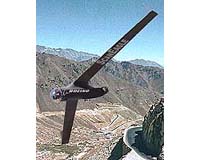
Boeing Begins ScanEagle Training In New Mexico
St. Louis MO (SPX) Jul 14, 2006 Boeing on Tuesday will began ScanEagle training at its new unmanned aerial vehicle (UAV) training site in Clovis, N.M. The site was selected to help meet the increasing demand from U.S. military forces for the Boeing/Insitu ScanEagle system and the training to maintain and operate it. Boeing instructors will train 12 students, both operators and maintainers, in a two-month course with new classes beginning every 30 days. ScanEagle flight operations will be conducted at the nearby Melrose Range; classroom training will take place at Clovis Community College. "The city of Clovis, Clovis Community College and the U.S. Air Force have been great partners in this endeavor," said Keith Hertzenberg, vice president, Boeing Training Systems and Services. "The site has everything we need to accomplish efficient ScanEagle training, and in turn, we expect our presence will result in a positive economic impact to the community." "We are excited about our partnership with Boeing," said Dr. John Neibling, Clovis Community College president. "The college has been working closely with Boeing and its training organization to ensure our facilities meet classroom requirements associated with UAV training." Boeing's Training Systems and Services (TSS) organization is responsible for ScanEagle training operations in Clovis. The TSS business encompasses fully integrated training systems as well as comprehensive services that include instructors, courseware developers, logistics support and mission planning systems. Boeing employees will make up the initial group of trainees in Clovis. As military customers purchase the ScanEagle system, servicemen and women will join the training program as well. Previously, all ScanEagle training had been conducted at Insitu's facility in Bingen, Wash., and at the Boeing Boardman test range in Oregon. Those sites will continue to be used for ScanEagle training. Currently, Boeing and Insitu employees are supporting U.S. Marine Corps and U.S. Navy operations in the field, conducting daily maintenance, mission planning and takeoffs and landings from ship or shore. ScanEagle has been deployed with the Marine Corps since August 2004 and the Navy since July 2005 and has completed more than 15,000 combat flight hours. ScanEagle's real-time imagery allows tactical commanders to develop a clearer picture of the battlefield and has resulted in improved situational awareness and saved lives. As standard payload, ScanEagle carries either an electro-optical or an infrared camera. Both are inertially stabilized. The gimbaled camera allows the operator to easily track stationary and moving targets. Capable of flying above 16,000 feet, the UAV normally provides persistent low-altitude reconnaissance. For a vehicle of its size, ScanEagle's endurance and payload combination is unmatched. The ScanEagle system can provide more than 15 consecutive hours of "on-station" coverage. It also has demonstrated the ability to operate in harsh weather environments, including high winds and heavy rains -- conditions that can keep other UAVs on the ground. ScanEagle is launched autonomously via a pneumatic wedge catapult launcher and flies pre-programmed or operator-initiated missions guided by GPS and its onboard flight control system. It is retrieved using a "Skyhook" system in which the UAV catches a rope hanging from a 50-foot high pole. The patented system allows ScanEagle to be runway-independent and operate from forward fields, mobile vehicles or ships. Community Email This Article Comment On This Article Related Links UAV Technology at SpaceWar.com UAV News - Suppliers and Technology
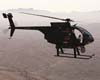
 Boeing Unmanned Little Bird Demonstrator Helicopter Flies Unmanned for First Time
 St. Louis MO (SPX) Jul 14, 2006
Boeing has achieved a major milestone in the development of its Unmanned Little Bird (ULB) technology demonstrator by flying the versatile aircraft unmanned for the first time. Boeing demonstrated the capability June 30 at the U.S. Army's Yuma Proving Ground in Yuma, Ariz., about 130 miles from the Boeing Rotorcraft facility in Mesa, Ariz., where Boeing has tested the aircraft, a modified MD 530F single-turbine helicopter, over the past two years with a safety pilot on board. |
|
|

| The content herein, unless otherwise known to be public domain, are Copyright 1995-2006 - SpaceDaily.AFP and UPI Wire Stories are copyright Agence France-Presse and United Press International. ESA PortalReports are copyright European Space Agency. All NASA sourced material is public domain. Additionalcopyrights may apply in whole or part to other bona fide parties. Advertising does not imply endorsement,agreement or approval of any opinions, statements or information provided by SpaceDaily on any Web page published or hosted by SpaceDaily. Privacy Statement |