
 |
 |
 |
 |
 |
 |
 |
 |
 |

 |
Boeing And MDA Complete Missile Defense Sensor Integration Test
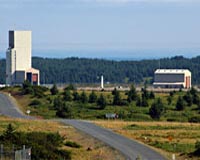
St. Louis MO (SPX) Jul 24, 2008 Boeing, working with industry teammates and the U.S. Missile Defense Agency, has successfully completed a Ground-based Midcourse Defense (GMD) system test that demonstrated the most complex integration to date of sensors required to support a missile intercept. While previous tests typically involved a single target-tracking sensor, this test used four: the Aegis Long Range Surveillance and Track system in the Pacific; the AN/TPY-2 radar in Juneau, Alaska; the Upgraded Early Warning Radar at Beale Air Force Base, Calif., and the Sea-Based X-Band Radar (SBX) in the Pacific. During the test, the sensors detected, tracked and assessed a long-range ballistic missile target launched from the Kodiak Launch Complex in Alaska. The sensors provided target information via ground and satellite links to GMD's dual-node, distributed fire control system, located at Fort Greely, Alaska, and in Colorado Springs, Colo. The fire control system combined the sensor data, generated accurate targeting coordinates and simulated a target shootdown with a virtual ground-based interceptor. "This successful test verified that four sensors separated by thousands of miles can detect, track and provide precise trajectory information to help defend against a long-range ballistic missile attack," said Scott Fancher, vice president and general manager of Boeing Missile Defense Systems. "The test builds on the momentum of the GMD program, which achieved intercepts with operationally configured interceptors in each of the past two years." "This test demonstrated GMD's network-centric ability to use data gathered from multiple, global sensors to give us a clearer picture of an incoming threat and greatly increase our ability to intercept that threat," said Greg Hyslop, vice president and program director for GMD. "The sensor integration required for this test greatly reduces risk for our next intercept test, which will be the most challenging ever." Boeing is the prime contractor for GMD, which provides the nation's only defense against long-range ballistic missiles. An integral element of the global ballistic missile defense system, GMD consists of sensors, command-and-control facilities, communications terminals, a 20,000-mile fiber optic communications network and interceptors deployed in underground silos at Fort Greely and at Vandenberg Air Force Base, Calif. Industry partners include Raytheon, Orbital Sciences Corp. and Northrop Grumman. Community Email This Article Comment On This Article Share This Article With Planet Earth
Related Links Learn about missile defense at SpaceWar.com Learn about nuclear weapons doctrine and defense at SpaceWar.com All about missiles at SpaceWar.com Learn about the Superpowers of the 21st Century at SpaceWar.com
 New Cuban nuke crisis threat
 Washington (UPI) Jul 23, 2008
 Is Russia serious about deploying its nuclear bombers in Cuba to retaliate against U.S. ballistic missile defense deployments in Poland or Lithuania? |
|
|

| The content herein, unless otherwise known to be public domain, are Copyright 1995-2007 - SpaceDaily.AFP and UPI Wire Stories are copyright Agence France-Presse and United Press International. ESA Portal Reports are copyright European Space Agency. All NASA sourced material is public domain. Additional copyrights may apply in whole or part to other bona fide parties. Advertising does not imply endorsement,agreement or approval of any opinions, statements or information provided by SpaceDaily on any Web page published or hosted by SpaceDaily. Privacy Statement |
 del.icio.us
 Digg
Digg Reddit
 YahooMyWeb
 Google
 Facebook