|
 |
 |
 |
 |
 |
 |
 |
 |

 |
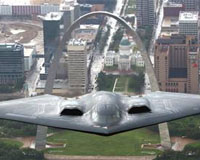
Boeing And Lockheed Martin Team For Next Generation Bomber Program
Washington DC (SPX) Jan 29, 2008 Boeing and Lockheed Martin will team up to perform studies and system development efforts including collaborative research and development in pursuit of the anticipated U.S. Air Force Next Generation Bomber program. This collaborative effort for a long-range strike program will include work in advanced sensors and future electronic warfare solutions including advancements in network enabled battle management, command and control, and virtual warfare simulation and experimentation. "Boeing and Lockheed Martin are working closely at all levels to capture the best of industry to develop and provide an effective and affordable solution for the warfighter," said Darryl Davis, president of Boeing Advanced Systems. "The work performed by the Boeing/Lockheed Martin team is designed to help the Air Force establish capability-based roadmaps for technology maturation and date certain timelines for the Next Generation Bomber program." Boeing and Lockheed Martin have formed teams for several high profile programs including the F-22 Raptor and Small Diameter Bomb Increment II. "The combined technical strengths of Boeing and Lockheed Martin offer the best possible team to provide a new long range capability to the USAF by 2018," stated Frank Cappuccio, Lockheed Martin's executive vice president and general manager Advanced Development Programs (the Skunk Works) and Strategic Planning. Community Email This Article Comment On This Article Related Links The Military Industrial Complex at SpaceWar.com Learn about the Superpowers of the 21st Century at SpaceWar.com
 France, India fire up military cooperation, nuclear energy ties
 New Delhi (AFP) Jan 26, 2008
India and France agreed Friday to push their military ties beyond arms sales, signing an accord on nuclear power cooperation as soon as New Delhi is allowed to enter the global atomic energy market. |
|
|

| The content herein, unless otherwise known to be public domain, are Copyright 1995-2007 - SpaceDaily.AFP and UPI Wire Stories are copyright Agence France-Presse and United Press International. ESA Portal Reports are copyright European Space Agency. All NASA sourced material is public domain. Additional copyrights may apply in whole or part to other bona fide parties. Advertising does not imply endorsement,agreement or approval of any opinions, statements or information provided by SpaceDaily on any Web page published or hosted by SpaceDaily. Privacy Statement |