
 |
 |
 |
 |
 |
 |
 |
 |
 |

 |
Blue Planet Echoes Of An Ice Age Mystery
Boulder CO (UPI) Oct 13, 2004 A controversy burning through the distance of 10,000 years still echoes in the modern world: Did humans cause the extinction of large animals at the end of the last ice age? The causes usually posited for the disappearance of woolly mammoths, saber-toothed cats, giant bison, moas, giant beavers and other megafauna at the end of the Pleistocene epoch carry a remarkably modern ring. Scientists offer two possible explanations: The animals were hunted to extinction by technologically advanced humans, or they were done in by rapidly changing climate. Sound familiar? In the looming extinction crisis, popular wisdom regards global warming and human encroachment as two of the largest nails being driven into wildlife's coffin. But the lessons from the Pleistocene are not nearly so clear cut. In fact, they might even offer some hope that the natural world is better than expected at resisting some of its modern burden. Choosing the leading suspect in the Pleistocene extinctions resembles how people tend to handicap the current presidential race: Who is ahead depends on which news sources they follow and their own preferences. It is sort of an intractable problem, particularly for North America, where you have overlapping human invasion and climate change, said Russell Graham, director of the Earth and Mineral Science Museum at Pennsylvania State University and one of the leading scientific advocates of the climate-change hypothesis. What we're seeing now with climate change and what is happening with humans is exactly what we saw in the Pleistocene, Graham told UPI's Blue Planet. Many species' ranges are being contracted, especially high-latitude and mountaintop species. Their vulnerability to extinction increases. For the most part, humans no longer hunt animals to extinction. Instead, they practice a kind of indirect assault - modifying the environment and shrinking habitat spaces. A recent paper in the journal Science - by Anthony Barnosky of the University of California, Berkeley, and colleagues - found (e)vidence from paleontology, climatology, archaeology and ecology now supports the idea that humans contributed to the extinction on some continents, but human hunting was not solely responsible for the pattern of extinction everywhere. Rather, the paper continued, evidence suggests that the intersection of human impacts with pronounced climatic change drove the precise timing and geography of extinction in the northern hemisphere. In North America, 33 genera of large animals went extinct, a result the authors attribute to a combination of climate and human hunting. In Eurasia, nine genera disappeared, mostly from climate change. In Australia, 21 genera vanished, which the authors attribute to overhunting -though evidence is sparse. In South America, 50 genera extinguished from causes still undetermined. It is a very good paper, which brings together a great range of data, said Ross MacPhee, curator of vertebrate zoology at the American Museum of Natural History in New York City. It does not, however, actually settle the question of whether humans or climate killed off the Pleistocene species. It continues to fascinate me that almost all modern extinctions have happened on islands, MacPhee told Blue Planet. In regards to mammals and birds, at least, the continental extinction numbers are puny. It was the reverse in the Pleistocene, however, he said. It continues to be a very tangled web as to cause and effect, but the only way in which island extinctions are different is that they go with lightning speed. It is wrong to think that they are different in kind. The latest work on Pleistocene extinctions also suggests they occurred in raggedy fashion. Even four or five years ago, it was possible to argue that all these guys went down at once, MacPhee said. This was particularly convenient for overkill. Humans were kind of these prehistoric 'Rambos' - a shock wave passing through the Americas. Newer evidence indicates the extinctions were not so sudden. Instead, they seem to have been spread over thousands of years. A recent article in Nature, for instance, about the giant Irish elk, found remnant populations survived long after its presumed extinction. Mammoths, too, survived until about 4,000 years ago on Wrangell Island in the Arctic - becoming 6,000-year Pleistocene leftovers. Instead of being a very dramatic, fast event 10,000 or 12,000 years ago, it appears that it was more spread out, MacPhee said. The spread of time is telling us something about the nature of the cause, (so there) is less reason to think that humans were important, except for the coup de gr��ce at the very end. There was something about the environment. On the other hand, MacPhee said he doubts climate change was the major culprit. In the sense that people usually talk about it, I still don't buy into it, he said. I believe that there have to be other forces at work. Graham added: I would be willing to buy overkill if there was more evidence. I think humans were involved in the extinction of the proboscidians (mammoths), but it would have happened anyway. If humans were a major contributor to the Pleistocene extinctions, MacPhee noted, they would have left more fingerprints on the crime scene. Where humans have been part of the fauna for millions of years, there have been very few recorded extinctions of large animals - only four or five in Africa and not a single documented extinction in Eurasia, he said. It's not enough to have lots of guys with spears, he added. It turns out to be a relatively difficult thing to drive species to extinction. We are still trying to force explanations into old boxes. This curious uncertainty about the fate of the Pleistocene megafauna offers some hope for the future of today's wildlife, which face similar threats - human intrusion and alteration of climate. Because so many have survived these problems in the past, many may survive them now. What the epic of the Pleistocene seems to be, by this different measure, is that populations of large beasts seem to have waxed and waned in size and variability, MacPhee explained. That's a fascinating thing. It's something in the environment, rather than just humans. They were being affected by natural conditions, perhaps even by long-cycle conditions. Examining the fossil record reveals conditions MacPhee called tremendous population bottlenecks. Some of the large mammals survived these bottlenecks - bison, musk oxen, brown bears - and some did not. That's what extinction is about, he said. Based on the newest research, MacPhee continued, the old, bipolar kind of thing - humans or climate - is just going to have to go. The basic biology has to be the same. We're all subject to the same rhythms that have altered the world, from the Tertiary (geologic epoch, 33.7 million to 23.8 million years ago) to what we have now. Any species that is around today is a survivor since that species originated. They must be adapted to long-cycle changes, though how it it works in detail is still open. Because the basic biology is the same, even in the face of modern threats from humans and climate, MacPhee said he remains hopeful. We can look forward to having most of our critters with us, he said, unless we willfully destroy the creatures or their habitat. I think the trend is away from that. Blue Planet is a weekly series by UPI examining the relationship of humans to the environment. E-mail [email protected] All rights reserved. Copyright 2004 by United Press International. Sections of the information displayed on this page (dispatches, photographs, logos) are protected by intellectual property rights owned by United Press International. As a consequence, you may not copy, reproduce, modify, transmit, publish, display or in any way commercially exploit any of the content of this section without the prior written consent of by United Press International. CommunityEmail This Article Comment On This Article Related Links SpaceDaily Search SpaceDaily Subscribe To SpaceDaily Express Nuclear Space Technology at Space-Travel.com
 Rewriting Glacial History In Pacific North America
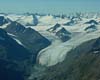 Edmonton AB (SPX) Jan 10, 2006
Although the story on glacier fluctuations in northwestern North America over the last 10,000 years has remained largely unchanged for decades, new evidence discovered by a University of Alberta researcher will rewrite that glacial history and offer clues about our climate history during the last several thousand years. |
|
|

| The content herein, unless otherwise known to be public domain, are Copyright 1995-2006 - SpaceDaily.AFP and UPI Wire Stories are copyright Agence France-Presse and United Press International. ESA PortalReports are copyright European Space Agency. All NASA sourced material is public domain. Additionalcopyrights may apply in whole or part to other bona fide parties. Advertising does not imply endorsement,agreement or approval of any opinions, statements or information provided by SpaceDaily on any Web page published or hosted by SpaceDaily. Privacy Statement |

