|
 |
 |
 |
 |
 |
 |
 |
 |

 |
Bird Samples From Mongolia Confirmed As H5N1 Avian Flu
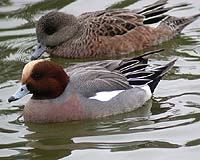
Washinton DC (SPX) Aug 22, 2005 The United States Department of Agriculture (USDA) has positively identified the pathogenic form of avian flu - H5N1 - in samples taken from birds last week in Mongolia by field veterinarians from the Wildlife Conservation Society (WCS). It is the first instance of this viral strain occurring in wild migratory birds with no apparent contact to domestic poultry or waterfowl. Present in Mongolia for a health survey of wild bird populations in the south and north of the country, WCS field vets Drs. William Karesh and Martin Gilbert responded to initial reports of the most recent avian influenza outbreak in Kovsgol Province near the Russian border from the Mongolian Ministry of Food and Agriculture, which conducted preliminary testing of birds that died at Erkhel Lake. Their finding coincided with confirmations of cases of avian influenza in Russia and Kazakhstan. Karesh and Gilbert immediately traveled to the site with a team of Mongolian virologists, veterinarians, and public health officials. Approximately 100 dead birds were found at the site. The team - including personnel from WCS, the Mongolian National Academy of Sciences, the Mongolian Institute of Veterinary Medicine, the State Central Veterinary Laboratory, Ministry of Food and Agriculture Veterinary Department, and the Ministry of Health Mongolian Center of Communicable Diseases with Natural Foci - collected samples from hundreds of wild birds, both live and dead including, ruddy shelduck, herring gull, black-headed gull, bar-headed goose, whooper swan, and Eurasian wigeon that are all at risk for contracting the virus. Recent reports of influenza outbreaks in wild birds in China and Russia have failed to put die-offs in perspective with the numbers of unaffected birds, thus there was no way to assess the impact. The WCS team at Erkhel Lake in Mongolia collected this information for the first time. Overall, over 6,500 apparently healthy birds of 55 species were observed on the lake. The percentage of sick or dead birds was miniscule according to Gilbert following the survey, suggesting that either the virus had little effect on the birds or that very few were actually infected by the bug. Early results suggest that it may be the latter. Supported by the U.N.'s Food and Agriculture Organization (F.A.O.), the team has sent the samples (774 in total) to the U.S.D.A.'s Poultry Research Laboratory in Athens, Georgia, for further testing to determine whether this virus is the H5N1 strain that has killed over 50 people in Southeast Asia and more than 5,000 wild birds in western China. As of today, preliminary tests from one dead whooper swan collected in Mongolia have shown the presence of the H5N1 strain of Avian Influenza using RT-PCR, while results from 30 live whooper swans living at the same site and also a nearby lake were negative for the virus. Samples collected from other live birds at the two sites, including sixty ruddy shelducks, twenty-four bar-headed geese, and twenty-five black-headed gulls, were found to be negative for the virus. Whereas prior outbreaks in wild birds have happened either in close proximity to infected domestic poultry and waterfowl, or in regions where such contact could not be excluded, Mongolia's paucity of domestic poultry suggests a new vector of avian flu. Finding the H5N1 strain during this expedition suggests that while the highly pathogenic avian influenza can be carried across long distances, the waterfowl species typically identified in recent outbreaks appear to be victims rather than effective carriers of the disease. The multidisciplinary, collaborative response to this latest outbreak reflects the WCS One World-One Health approach to making informed, multidisciplinary decisions on global health crises that intersect human, wildlife, and livestock health. WCS experts are warning that to contain this potential epidemic, prevention activities must include better management practices in farms, especially those that are small and open-air, where domestic poultry and waterfowl are allowed to intermingle with wild birds. Officials would also need to monitor wildlife markets, where wild and domesticated species are kept in close proximity, and risk exposure to a wide range of pathogens. Wildlife and health experts, including the F.A.O., maintain that indiscriminate culling of wild migratory bird populations would be ineffective in preventing the spread of avian flu. "Focusing our limited resources on the hubs and activities where humans, livestock, and wildlife come into close contact," says Dr. William Karesh, Director of WCS's Field Veterinary Program, who lead the WCS team in Mongolia, is "the best hope for successfully preventing the spread of avian flu and protecting both people and animals." Community Email This Article Comment On This Article Related Links Wildlife Conservation Society SpaceDaily Search SpaceDaily Subscribe To SpaceDaily Express Epidemics on Earth - Bird Flu, HIV/AIDS, Ebola
 Less Threatening Bird Flu
 Washington (UPI) Jan 11, 2006
Talk about good news and bad news: While more cases of avian flu are identified in both birds and humans in Turkey, the first possible signs emerged that the virus itself might not be as lethal as feared. |
|
|

| The content herein, unless otherwise known to be public domain, are Copyright 1995-2006 - SpaceDaily.AFP and UPI Wire Stories are copyright Agence France-Presse and United Press International. ESA PortalReports are copyright European Space Agency. All NASA sourced material is public domain. Additionalcopyrights may apply in whole or part to other bona fide parties. Advertising does not imply endorsement,agreement or approval of any opinions, statements or information provided by SpaceDaily on any Web page published or hosted by SpaceDaily. Privacy Statement |