|
 |
 |
 |
 |
 |
 |
 |
 |

 |
Biometric Data Keeps Captured Terrorists Behind Bars
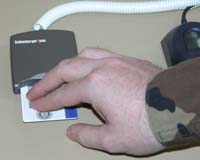
American Forces Press Service Washington DC (SPX) Mar 15, 2006 A high-tech Defense Department identification system has linked some captured terrorists to previous crimes and prevented their release from overseas detention facilities, senior defense officials said at a Senate Armed Services Committee hearing here March 10. "I understand that the (defense) department is collecting biometric information from individuals detained in Iraq and for forensic investigations of (improvised explosive device) attacks," Texas Sen. John Cornyn, chairman of the SASC's emerging threats and capabilities subcommittee, said to Paul McHale, assistant secretary of defense for homeland security. "Consistent with applicable law, we are aggressively using biometrics for the purposes that you described, Senator," McHale answered. DoD established standard procedures for collecting biometrics information about a year and a half ago and provided that system to overseas U.S. combatant commands, McHale said. Biometrics is defined as measurable physical or behavioral characteristics that can be used to identify people. Terrorists in Iraq often employ IEDs, or roadside bombs, against U.S., coalition, and Iraqi military forces and civilians. Cornyn also asked McHale if DoD was sharing its detainee biometrics information with the U.S. Departments of Justice, State or Homeland Security, so that detainees who might escape could be prevented from entering the United States to do mischief. McHale responded that DoD's detainee biometrics information databank is collocated with the FBI and is also shared with the Department of Homeland Security and other agencies. The biometrics program used for identifying detainees "is an extraordinary success story," McHale said. In many instances, he added, that biometric data has kept dangerous detainees safely under lock and key. "We have linked that data to specific individuals and in specific cases have kept them in custody under circumstances, where but for that biometric data, they might have been released," McHale said. Similar systems are being used to improve force protection at U.S. military bases in Iraq. During a demonstration conducted in the Washington, D.C., area in May 2005, officials showed how biographical data, facial photographs, fingerprints and iris scans can be employed to develop ID cards that can't be counterfeited, ideal for use by Iraqis and other non-U.S. citizens who work on U.S. bases in Iraq. The need for a better way to screen people coming onto U.S. bases in Iraq was illustrated by the Dec. 21, 2004, bombing of a military dining facility in Mosul. That blast killed 22 people, including 14 U.S. soldiers, and wounded at least 50. It was first thought the dining hall had been hit by a rocket attack. Further investigation of the Mosul bombing pointed to the likelihood that a suicide bomber had infiltrated the base - one non-U.S. person killed couldn't be identified - and set off the explosion. Community Email This Article Comment On This Article Related Links - The Long War - Doctrine and Application
 Pressable Photonic Crystals Produce Full-Colour Fingerprints
 Toronto ON (SPX) Mar 15, 2006
In the future, law enforcement officials may take full-colour fingerprints using new technology developed by a University of Toronto-led team of international researchers. |
|
|

| The content herein, unless otherwise known to be public domain, are Copyright 1995-2006 - SpaceDaily.AFP and UPI Wire Stories are copyright Agence France-Presse and United Press International. ESA PortalReports are copyright European Space Agency. All NASA sourced material is public domain. Additionalcopyrights may apply in whole or part to other bona fide parties. Advertising does not imply endorsement,agreement or approval of any opinions, statements or information provided by SpaceDaily on any Web page published or hosted by SpaceDaily. Privacy Statement |