|
 |
 |
 |
 |
 |
 |
 |
 |

 |
Biologists Hail Creation Of Largest Ocean Preserve Ever
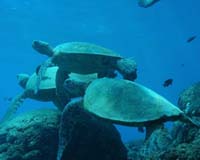
Birmingham AL (SPX) Jun 21, 2006 Three leading marine researchers hail President Bush's expected announcement of the creation of the world's largest marine protected area as a vital step in preserving unique and endangered wildlife, which could hold the keys to fighting human diseases, including cancer and AIDS. Uab Biologist Thane Wibbles, PH.D, was in Hawaii just three weeks ago. Wibbles, past president of the International Sea Turtle Society, is researching the effects of incubation temperature in determining the sex of the hatchlings of the Hawaiian green sea turtle. The primary nesting location for the Hawaiian green sea turtle is located in the preserve. "It is an extremely important area and an extremely pristine area," he said. Wibbles and UAB graduate student Jenny Estes, conduct their research from Honolulu, via equipment placed in the nesting areas by the National Marine Fisheries Service Pacific Island Science Center, which monitors the region. Wibbles compares the importance of preserving an ocean to preserving a national forest. "If it's taken care of, you can preserve it for eternity and you can see what a healthy coral reef is like." UAB Biologist James Mcclintock, Ph.D, who has a point of land named for him in Antarctica in recognition of his marine research, said: "While it is fair to say that President Bush does not have a reputation for placing a priority on enacting legislation that provides for protection of the environment, in this single act he has succeeded in raising the global bar on the critical preservation of our oceans." UAB Biologist Charles Amsler, Ph.D., who with McClintock, studies the chemical defenses of marine plants and animals in Antarctica, said: "What impresses me most about this preserve is its size, and not just for size's sake. The vastness of the region makes it more likely to be self-sustaining. "As a biologist studying interactions between marine organisms, it is important to know that all the major players that the organisms have evolved with are present in the community as you are studying it now. For example, imagine trying to understand why flowers produce nectar if bees had become extinct." Community Email This Article Comment On This Article Related Links University of Alabama Water News - Science, Technology and Politics
 Creating A Window On Oceans In Motion
 Halifax, Canada (SPX) Jun 25, 2006
Scientists and resource managers could soon have a highly detailed picture of marine conditions and the migrations of fish and ocean animals throughout the world, according to international experts convening a landmark conference in Canada June 27-30. |
|
|

| The content herein, unless otherwise known to be public domain, are Copyright 1995-2006 - SpaceDaily.AFP and UPI Wire Stories are copyright Agence France-Presse and United Press International. ESA PortalReports are copyright European Space Agency. All NASA sourced material is public domain. Additionalcopyrights may apply in whole or part to other bona fide parties. Advertising does not imply endorsement,agreement or approval of any opinions, statements or information provided by SpaceDaily on any Web page published or hosted by SpaceDaily. Privacy Statement |