|
 |
 |
 |
 |
 |
 |
 |
 |

 |
'Biobullets' Fight Harmful Mussels
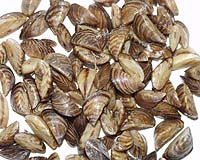
Washington DC (SPX) Feb 01, 2006 British researchers have developed a "biobullet" that could help control an invasive mollusk that has ravaged U.S. waterways for nearly two decades, clogging water pipes, virtually wiping out some native mussels species, and causing billions of dollars in industrial damage. The new microcapsules, which contain toxins that dissolve within a zebra mussel's digestive tract, offer a safe and cost-effective way of eliminating one of the world's "most important economic pests", without harming other aquatic life, according to scientists at the University of Cambridge. The report, in the Feb. 1 issue of the American Chemical Society's Environmental Science & Technology journal, outlines how zoologist David Aldridge and colleagues developed microcapsules about the size of the algae particles that zebra mussels feed on. Once ingested, the "biobullets" slowly release small amounts of potassium chloride, a salt that is poisonous to most freshwater mollusks. Unlike other methods used to eradicate zebra mussels, such as chlorine, "biobullets" pose little or no threat to other marine animals, the researchers say, because they rapidly degrade and disperse in water. Since their accidental introduction from Eastern Europe into the Great Lakes in the late 1980s, zebra mussels have become notorious aquatic pests, fouling water intake pipes at hydroelectric stations, nuclear power plants and industrial facilities. In addition, zebra mussels can anchor themselves to other mollusks, making it impossible for native species to thrive. In some case, as many as 10,000 zebra mussels have attached themselves to a single native mussel, according to the U.S. Geological Survey (USGS). In all, the researchers note, coping with these pests costs upward of $5 billion annually. Without many natural predators, zebra mussels have rapidly spread and are now found in 21 states including Oklahoma, Louisiana and Vermont, according to the USGS. Unchecked, many scientists suspect zebra mussels will soon spread throughout North American waterways. Community Email This Article Comment On This Article Related Links The American Chemical Society Bringing Order To A World Of Disasters A world of storm and tempest When the Earth Quakes
 Workshop On Telemedicine For Africa
 Brussels, Belgium (ESA) Feb 01, 2006
A one-day workshop with the aim of better understanding how satellite telecommunications might be useful for improving and complementing African healthcare systems was held in Brussels on 27 January 2006. |
|
|

| The content herein, unless otherwise known to be public domain, are Copyright 1995-2006 - SpaceDaily.AFP and UPI Wire Stories are copyright Agence France-Presse and United Press International. ESA PortalReports are copyright European Space Agency. All NASA sourced material is public domain. Additionalcopyrights may apply in whole or part to other bona fide parties. Advertising does not imply endorsement,agreement or approval of any opinions, statements or information provided by SpaceDaily on any Web page published or hosted by SpaceDaily. Privacy Statement |