
 |
 |
 |
 |
 |
 |
 |
 |
 |

 |
Big-Brained Animals Evolve Faster
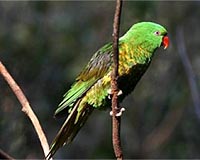
Chicago IL (SPX) Aug 15, 2008 Ever since Darwin, evolutionary biologists have wondered why some lineages have diversified more than others. A classical explanation is that a higher rate of diversification reflects increased ecological opportunities that led to a rapid adaptive radiation of a clade. A textbook example is Darwin finches from Galapagos, whose ancestor colonized a competitors-free archipelago and rapidly radiated in 13 species, each one adapted to use the food resources in a different way. This and other examples have led some to think that the progenitors of the major evolutionary radiations are those that happened to be in the right place and at the right time to take advantage of ecological opportunities. However, is it possible that biological diversification not only depends on the properties of the environment an ancestral species finds itself in, but also on the features of the species itself? Now a study supports this possibility, suggesting that possessing a large brain might have facilitated the evolutionary diversification of some avian lineages. Over 20 years ago, Jeff Wyles, Allan Wilson, and Joseph Kunkel proposed that big brains might favor adaptive evolutionary diversification in animals by facilitating the behavioral changes needed to use new resources or environments, a theory known as the behavioral drive hypothesis. When these authors formulated their hypothesis, evidence that the size of the brain limits the cognitive capacity of animals were scanty. Since then, however, a substantial body of evidence has confirmed that animals with larger brains, relative to their body size, have more developed skills for changing their behavior through learning and innovation, facilitating the invasion of novel environments and the use of novel resources. Despite the progress, the role of the brain in the adaptive diversification of animals has remained controversial, mostly due to the difficulties to demonstrate that big-brained animals evolve faster. Now, ecologist Daniel Sol of CREAF-Autonomous University of Barcelona and evolutionary biologist Trevor Price of the University of Chicago, provide evidence for such a role in birds in an article in the August issue of The American Naturalist. Analyzing body size measures of 7,209 species (representing 75% of all avian species), they found that avian families that have experienced the greatest diversification in body size tend to be those with brains larger than expected for their body size. These include the Picidae (woodpeckers), Bucerotidae (hornbills), Psittacidae (parrots), Strigidae (owls), Menuridae (lyrebirds) and Corvidae (crows). Brain size can promote morphological diversification because it facilitates range expansions and speciation, yet the analyses indicate that the brain-diversification association is statistically independent of geographic range and species richness. "The most likely alternative," Daniel Sol states, "is that big brains enhance the rate of evolutionary diversification by facilitating changes in behavior, which would place new selection pressures on populations and favor adaptive divergence." Thus, in species with high cognitive styles, behavior might be, along with environmental factors, a major driving force for evolution. Community Email This Article Comment On This Article Share This Article With Planet Earth
Related Links University of Chicago Press Journals Darwin Today At TerraDaily.com
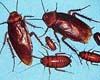
 Cockroach King reigns as pest-killers discuss climate change
 Bangkok (AFP) Aug 17, 2008
More than 100 of Southeast Asia's hardiest bugs measured up this week in Bangkok, where experts met to discuss new ways of controlling the pests, which they say are a major contributor to global warming. |
|
|

| The content herein, unless otherwise known to be public domain, are Copyright 1995-2007 - SpaceDaily.AFP and UPI Wire Stories are copyright Agence France-Presse and United Press International. ESA Portal Reports are copyright European Space Agency. All NASA sourced material is public domain. Additional copyrights may apply in whole or part to other bona fide parties. Advertising does not imply endorsement,agreement or approval of any opinions, statements or information provided by SpaceDaily on any Web page published or hosted by SpaceDaily. Privacy Statement |
 del.icio.us
 Digg
Digg Reddit
 YahooMyWeb
 Google
 Facebook