
 |
 |
 |
 |
 |
 |
 |
 |
 |

 |
Beavers: Dam Good For Songbirds
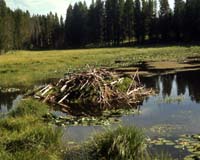
Bronx NY (SPX) Oct 14, 2008 The songbird has a friend in the beaver. According to a study by the Wildlife Conservation Society (WCS), the busy beaver's signature dams provide critical habitat for a variety of migratory songbirds, particularly in the semi-arid interior of the West. The study, which appears in the October 2008 issue of the journal Western North American Naturalist, says that through dam building, beavers create ponds and stimulate growth of diverse streamside vegetation critical for birds, including many migratory songbirds in decline. The study found that the more dams beavers build, the more abundant and diverse local songbirds become. "We found that increasing density of beaver dams was associated with a diverse and abundant bird community and the wetland and streamside habitat these species depend on," said Hilary Cooke, the study's lead author who is now finishing her dissertation at the University of Alberta in Edmonton. "This habitat is critical to birds in semi-arid regions yet has been severely degraded or lost through much of the West. Our results suggest that management of beavers may be an important tool for restoring habitat and reversing bird declines." Beaver populations once numbered in the millions in the American West but dramatically collapsed due to the fur trade in the 1800s. Currently, beaver are often considered a pest species when they take down trees and flood property. Their influence is still missing on most watersheds in the West, yet this and other studies suggest that beaver are very important to wildlife and to reviving the natural function of streams. "Beaver are an essential ecosystem engineer," said co-author Steve Zack of the Wildlife Conservation Society. "Beavers help repair degraded stream habitats and their dams and associated ponds recharge local water tables and create wetlands. With our changing climate likely to mean increasing droughts in the West, managing ways to allow watersheds to act more like sponges will be a challenge. Beaver are a powerful tool to be considered for that, and the associated benefits to other wildlife add to their value." This study was part of a larger effort by WCS to identify how to restore wildlife to streamside habitats in the western U.S. This study occurred in Wyoming where beaver reintroductions have been done on both private and public lands with owner consent and interest. In 2007, WCS made history with other beaver news when an active beaver lodge was discovered in the Bronx River on the grounds of the Bronx Zoo - the first one spotted in New York City in at least two centuries. The Wildlife Conservation Society saves wildlife and wild places worldwide. We do so through science, global conservation, education and the management of the world's largest system of urban wildlife parks, led by the flagship Bronx Zoo. Together these activities change attitudes towards nature and help people imagine wildlife and humans living in harmony. WCS is committed to this mission because it is essential to the integrity of life on Earth. Community Email This Article Comment On This Article Share This Article With Planet Earth
Related Links Wildlife Conservation Society (WCS) Darwin Today At TerraDaily.com
 Bold Traveler's Journey Toward The Center Of The Earth
 Berkeley CA (SPX) Oct 13, 2008
The first ecosystem ever found having only a single biological species has been discovered 2.8 kilometers (1.74 miles) beneath the surface of the earth in the Mponeng gold mine near Johannesburg, South Africa. There the rod-shaped bacterium Desulforudis audaxviator exists in complete isolation, total darkness, a lack of oxygen, and 60-degree-Celsius heat (140 degrees Fahrenheit). |
|
|

| The content herein, unless otherwise known to be public domain, are Copyright 1995-2007 - SpaceDaily.AFP and UPI Wire Stories are copyright Agence France-Presse and United Press International. ESA Portal Reports are copyright European Space Agency. All NASA sourced material is public domain. Additional copyrights may apply in whole or part to other bona fide parties. Advertising does not imply endorsement,agreement or approval of any opinions, statements or information provided by SpaceDaily on any Web page published or hosted by SpaceDaily. Privacy Statement |
 del.icio.us
 Digg
Digg Reddit
 YahooMyWeb
 Google
 Facebook