
 |
 |
 |
 |
 |
 |
 |
 |
 |

 |
Bangladesh bans 'toxic' ship for second time
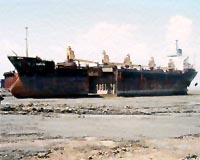
Dhaka, Bangladesh (AFP) Sept 16, 2008 Bangladesh's high court has ruled that a ship with allegedly hazardous substances cannot be dismantled on its coast, a lawyer said Thursday. The government last month banned the New Atlantia -- described by Greenpeace as hazardous in its global list of toxic ships -- after a Bangladeshi ship breaker imported it under the name of MT Enterprise. But that decision was reversed this week after a government inspection did not find any excessive hazardous materials, as described by Greenpeace. Iqbal Kabir, of the Bangladesh Environmental Lawyers' Association, told AFP his group filed a petition to the high court seeking the ban to stay in place, which was upheld late Wednesday. "The high court has ruled that the ship cannot be harboured and dismantled in Bangladesh." The tanker is moored off the port of Chittagong and was due to be taken to Sitakundu, on the country's southeastern coast, to be dismantled. The vessel was now expected to leave Bangladeshi shores, Kabir said. Up to 130 large ships are dismantled each year on beaches at Sitakundu -- home to the world's largest ship breaking yards -- 30 kilometres (18 miles) north of Chittagong city. Sitakundu's breaking yards have experienced a boom in recent years due to soaring demand for steel. Community Email This Article Comment On This Article Share This Article With Planet Earth
Related Links Our Polluted World and Cleaning It Up
 Color-Coded Bacteria Can Spot Oil Spills, Leaky Pipes And Storage Tanks
 London UK (SPX) Sep 18, 2008
Oil spills and other environmental pollution, including low level leaks from underground pipes and storage tanks, could be quickly and easily spotted in the future using colour coded bacteria, scientists heard at the Society for General Microbiology's Autumn meeting at Trinity College, Dublin. |
|
|

| The content herein, unless otherwise known to be public domain, are Copyright 1995-2007 - SpaceDaily.AFP and UPI Wire Stories are copyright Agence France-Presse and United Press International. ESA Portal Reports are copyright European Space Agency. All NASA sourced material is public domain. Additional copyrights may apply in whole or part to other bona fide parties. Advertising does not imply endorsement,agreement or approval of any opinions, statements or information provided by SpaceDaily on any Web page published or hosted by SpaceDaily. Privacy Statement |
 del.icio.us
 Digg
Digg Reddit
 YahooMyWeb
 Google
 Facebook