|
 |
 |
 |
 |
 |
 |
 |
 |

 |
BAE Systems' Rad750 Computers Support Air Force Experiment Satellite
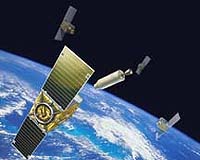
Manassas VA (SPX) May 10, 2005 BAE Systems' radiation hardened microprocessors (RAD750) are supporting another U.S. space exploration, this time for the Air Force Research Laboratory's Experimental Satellite System-11 (XSS-11) spacecraft. The mission was launched from Vandenberg Air Force Base, Calif., April 11, boosting the satellite into Earth orbit. The RAD750 single board computer, built at BAE Systems' Manassas, Va., facility, is the backbone of the spacecraft's command and data handling system, designed by Broad Reach Engineering Company. BAE Systems' program manager Tom Bowmaster said, "The RAD750 will provide the necessary computing power in the command and data handling subsystem of the spacecraft, which enables control and telemetry in flying the XSS-11." The mission will last 12 to 18 months. The XSS-11 will demonstrate new autonomous satellite features during encounters with six or seven spent rocket stages and inactive U.S. satellites. The microsatellite project is designed to test technologies that allow quick visual examinations or even maintenance of spacecraft in orbit. BAE Systems has a 20-year history of providing radiation-hardened solutions for U.S. space programs. Its RAD6000 computers were installed on each of the still-operating Mars Rovers - the only control and data computers aboard the two Rovers - to execute flight, landing and exploration operations on Mars. The RAD750 represents the next-generation of space microprocessors, and was first launched onboard NASA's Deep Impact mission. BAE Systems is an international company engaged in the development, delivery and support of advanced defense and aerospace systems in the air, on land, at sea and in space. BAE Systems North America is one of America's foremost national security, aerospace and information systems companies. Community Email This Article Comment On This Article Related Links SpaceDaily Search SpaceDaily Subscribe To SpaceDaily Express Space Technology News - Applications and Research
 TeleRay Mobile Sat TV Antenna For Japan Auto Market
 Las Vegas CA (SPX) Jan 5, 2006
RaySat has introduced TeleRay, the world's smallest satellite TV vehicle antenna, into the domestic Japanese automotive market. |
|
|

| The content herein, unless otherwise known to be public domain, are Copyright 1995-2006 - SpaceDaily.AFP and UPI Wire Stories are copyright Agence France-Presse and United Press International. ESA PortalReports are copyright European Space Agency. All NASA sourced material is public domain. Additionalcopyrights may apply in whole or part to other bona fide parties. Advertising does not imply endorsement,agreement or approval of any opinions, statements or information provided by SpaceDaily on any Web page published or hosted by SpaceDaily. Privacy Statement |