|
 |
 |
 |
 |
 |
 |
 |
 |

 |
Automakers Rush To Develop Hydrogen Cars
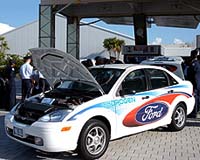
Washington (UPI) Apr 04, 2005 A sleek, silver BMW H2R racecar sat prominently displayed at the National Hydrogen Association Conference in Washington last week as a testament to the capabilities of Hydrogen-powered vehicles. The BMW H2R runs on a 12-cylinder internal combustion engine and has set nine records against similar vehicles, boasting a top speed of more than 186 mph. "We can get clean energy and still maintain all of the performance that Americans are hungry for," said Patrick Serfass, technical and program development manager for the National Hydrogen Association. BMW is just one of several automakers in the race to develop affordable and efficient hydrogen-powered vehicles by the end of the decade. While hydrogen has been used for years by NASA to power rockets in the space program, it was only in the last decade that auto companies began to realistically look into the possibility of using the plentiful gas for mass transportation. The issue gained momentum in 2003 when President Bush announced a $1.2 billion Hydrogen Fuel Initiative during his State of the Union Address. And in an attempt to drive the research and development of hydrogen powered vehicles, U.S Department of Energy secretary Samuel Bodman signed recognition agreements Wednesday with several auto companies, pledging to make hydrogen vehicles more efficient and cost-effective by 2010. According to DOE estimates, hydrogen is currently three to four times more expensive to produce than gasoline. However, the light and plentiful gas produces zero emissions and can be produced domestically, potentially reducing U.S. dependency on foreign oil. "The progress that DOE and the automotive and energy industries have made so far has us on the path to an industry commercialization decision in 2015. If our research progr am is successful, it is not unreasonable to think we could see the beginning of mass market penetration by 2020," Bodman said in a speech Wednesday. Representatives from Ford Motor Company, Daimler-Chrysler, General Motors and ChevronTexaco joined Bodman in signing the recognition. However, those corporations represent only a small portion of the major players involved in developing hydrogen-powered vehicles, and a representative from Toyota said that the corporation was upset that it was excluded from the event. "We're in it for the long haul and we've been there from the very beginning," said Cindy Knight, environmental communications administrator for Toyota. Knight pointed out that Toyota and Honda were at the forefront of Hydrogen technology since both companies were the first to introduce vehicles using fuel cells. Toyota has a fleet of about 20 vehicles between the U.S. and Japan in use by customers. Meanwhile, political leaders, auto companies, gas companies and corporations worldwide have pledged to develop the most efficient hydrogen design possible. "Hydrogen is allowing us to think about energy differently," said Serfass. According to Serfass, the rush to develop affordable hydrogen vehicles rose out of a need for energy independence, environmental sustainability and economic prosperity. One company on the quest to develop a cost effective hydrogen vehicle is Ballard Power Systems, a Canadian corporation that holds contracts with both Ford and Daimler-Chrysler. Unlike BMW, which has focused most of its hydrogen research on the internal combustion engine, Ballard has developed vehicles powered by fuel cells, which use hydrogen and oxygen to generate electricity. The system works similar to an electric car. According to Michael Rosenberg, treasurer of Ballard Power Systems, vehicles powered by fuel cel ls are quieter and cleaner, with minimal vibrations compared to traditional gasoline cars. "This is the only power plant available that can give you the same benefits of gasoline powered vehicles," said Rosenberg. "In addition you get other benefits too." Rosenberg said that because fuel cells were designed to actually produce energy rather than burn it, the technology was more apt for vehicles equipped with modern electrical devices like DVD players, televisions and cell phones. Other companies, such as Toyota and Honda, have focused more on hybrid vehicles, which use a combination of fuel cell and internal combustion energy methods. "I think a lot of companies are going to be moving towards the hybridization of their vehicles," said Serfass. "There is a premium on having reliable power that supersedes some of the costs." "We're moving hydrogen from an industrial commodity to a consumer commodity," said Serfass. Community Email This Article Comment On This Article Related Links SpaceDaily Search SpaceDaily Subscribe To SpaceDaily Express Space Technology News - Applications and Research
 Industry Team Achieve New Communications Technology With AESA Radars
 Baltimore MD (SPX) Jan 12, 2006
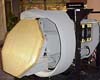
A team comprised of three leading US aerospace and defense contractors has demonstrated an innovative technological use of active electronically scanned array (AESA) radars for high-bandwidth communications. |
|
|

| The content herein, unless otherwise known to be public domain, are Copyright 1995-2006 - SpaceDaily.AFP and UPI Wire Stories are copyright Agence France-Presse and United Press International. ESA PortalReports are copyright European Space Agency. All NASA sourced material is public domain. Additionalcopyrights may apply in whole or part to other bona fide parties. Advertising does not imply endorsement,agreement or approval of any opinions, statements or information provided by SpaceDaily on any Web page published or hosted by SpaceDaily. Privacy Statement |