|
 |
 |
 |
 |
 |
 |
 |
 |

 |
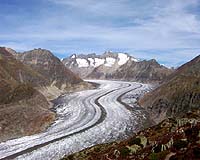
Austrian glaciers shrink the most in five years
Vienna (AFP) March 29, 2008 Austria's glaciers retreated more than 22 metres (24 yards) on average last year, in the biggest shrinking for five years, the country's Alpine Club said Saturday. "All glaciers experienced melting and retreated... an average of 22.2 metres" in the 2006-2007 period, the Alpine Club said, citing measurements of 93 glaciers by its specialists who blamed milder than normal temperatures. The record was on the Weisssee Ferner glacier in the Oetztal range of southwest Austria, which shrank 96.5 metres, while two more glaciers in the south retreated by 87 and 84 metres respectively. Glaciers in the east generally retreated less than the average, which was itself slightly below the 22.9 metres of 2002-2003, when most of Europe experienced a heatwave. Average temperatures during the 2006-2007 winter were 3.2 degrees Celsius above normal for the season and 5.5 degrees higher for the month of April 2007. The Austrian Alpine Club has been measuring the state of the country's glaciers for 115 years. Community Email This Article Comment On This Article Related Links Beyond the Ice Age
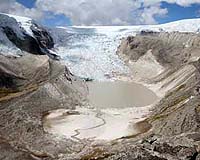
 UN warns climate change melting glaciers at alarming rate
 Zurich (AFP) March 16, 2008
The world's glaciers are melting at an alarming rate, the UN said Sunday, calling for immediate action to prevent further constraints on water resources for large populations. |
|
|

| The content herein, unless otherwise known to be public domain, are Copyright 1995-2007 - SpaceDaily.AFP and UPI Wire Stories are copyright Agence France-Presse and United Press International. ESA Portal Reports are copyright European Space Agency. All NASA sourced material is public domain. Additional copyrights may apply in whole or part to other bona fide parties. Advertising does not imply endorsement,agreement or approval of any opinions, statements or information provided by SpaceDaily on any Web page published or hosted by SpaceDaily. Privacy Statement |