|
 |
 |
 |
 |
 |
 |
 |
 |

 |
Atmospheric Warming Expanding The Tropics
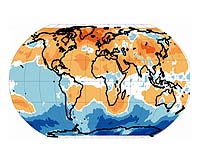
TerraDaily US Editor Washington DC (SPX) May 29, 2006 Earth's atmosphere seems to be warming in a way that is drawing the jet streams away from the equator and toward the poles, expanding tropical areas in the process, researchers reported Friday. If the data hold up, it means some of Earth's desert areas will be expanding, and drought conditions could strike formerly well-watered regions around the globe. Reporting in the May 26 issue of Science, researchers at the University of Washington, in Seattle, elsewhere said they examined remote-sensing data from microwave sounding units aboard Tiros-N and NOAA 6 to NOAA 14 satellites that was collected from 1979 to 2005. The data show the troposphere � the lower atmosphere � has been heating up faster in twin bands at around 30 degrees north and south latitudes than it has been warming elsewhere. The team also found that each hemisphere's jet stream has moved toward the pole by about 1 degree of latitude, or 70 miles, over the same time period. �The enhanced tropospheric warming in the subtropical regions increases the temperature gradients at higher latitudes, but decreases atmospheric temperature gradients in the lower latitudes,� lead researcher Qiang Fu told TerraDaily.com. �In this way the jet streams, the location of maximum westerly wind aloft, were pushed poleward.� Qiang and colleagues also found slower-than-expected warming in the stratosphere � the upper atmosphere - in the same locations, which combined with the tropospheric warming seems to be causing the jet stream migration. Co-author John M. Wallace said it is not clear yet whether the jet stream slippages can prove global warming or are merely an anomaly, but he added that if they continue, the long-term impact on regional rainfall patterns could be serious. "The jet streams mark the edge of the tropics, so if they are moving poleward, that means the tropics are getting wider," Wallace said. "If they continue to move poleward at this rate until the end of this century, very dry areas could nudge farther toward the poles, perhaps by a few hundred miles," he told TerraDaily.com. The faster-warming tropospheric band at 30 degrees north latitude traverses the southern United States, southern China and North Africa. At 30 degrees south latitude, it crosses southern Australia, South Africa and southern South America. The troposphere is the layer of air ranging from the Earth's surface up to about 7.5 miles in altitude. It is the part of the atmosphere in which most weather occurs. Computer models have predicted a poleward shift of jet streams during the 21st century, but the models also expected faster warming to occur in the tropical stratosphere. Instead, the research found faster warming at the 30 degrees latitude mark in the troposphere in both hemispheres. Wallace said the new research suggests that faster subtropical warming of the troposphere, which moves the jet streams, also could shift mid-latitude storm tracks poleward � meaning, perhaps, more hurricanes striking farther north. The same phenomenon could reduce winter precipitation in regions such as southern Europe - including the Alps - and southern Australia. "It's a very intriguing problem,� Fu said, �why the increase in tropospheric temperatures and the decrease in stratospheric temperatures in the subtropical region happens in tandem, almost exactly." Community Email This Article Comment On This Article Related Links U. Washington Atmospheric Sciences The Air We Breathe at TerraDaily.com
 In The Baltics Spring And Smoke Is In The Air
 Riga (AFP) May 03, 2006
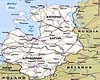
Around the European Union's Baltic member states, one sure sign that spring has arrived is the acrid smell of smoke from grass fires in the crisp north European air. This year, in Latvia alone, the emergency services have recorded nearly 3,000 cases of people setting light to grass in unattended fields, meadows, even back gardens. |
|
|

| The content herein, unless otherwise known to be public domain, are Copyright 1995-2006 - SpaceDaily.AFP and UPI Wire Stories are copyright Agence France-Presse and United Press International. ESA PortalReports are copyright European Space Agency. All NASA sourced material is public domain. Additionalcopyrights may apply in whole or part to other bona fide parties. Advertising does not imply endorsement,agreement or approval of any opinions, statements or information provided by SpaceDaily on any Web page published or hosted by SpaceDaily. Privacy Statement |