|
 |
 |
 |
 |
 |
 |
 |
 |

 |
Atmospheric Mercury Has Declined: But Why?
Washington - Jun 12, 2003 The amount of gaseous mercury inthe atmosphere has dropped sharply from its peak in the 1980s and has remained relatively constant since the mid 1990s. This welcome decline may result from control measures undertaken in western Europe and North America, but scientists who have just concluded a study of atmospheric mercury say they cannot reconcile the amounts actually found with current understanding of natural and manmade sources of the element. An international group of scientists, led by Franz Slemr of the Max Planck Institute for Chemistry [Max-Planck-Institut fuer Chemie] in Mainz, Germany, studied the worldwide trend of total gaseous mercury at six sites in the northern hemisphere, two sites in the southern hemisphere, and on eight ship transatlantic ship cruises since 1977. They have published their findings in Geophysical Research Letters, a journal of the American Geophysical Union. The fixed sites ranged from the Canadian Arctic to Antarctica. In both hemispheres, total gaseous mercury increased in the late 1970s, apparently peaked in the late 1980s, decreased to a minimum in the mid 1990s, and has remained relatively constant since then. Concentrations in the southern hemisphere are about one-third less than in the northern hemisphere. These observations accord well, the researchers say, with data on mercury deposited in peat bogs and found in ice cores. Scientists have believed that natural processes and human activities put about equal amounts of mercury into the atmosphere. Assuming that natural emissions and re-emissions of the historically deposited mercury have remained constant, the observed reduction of about 17 percent in concentration from 1990 to 1996 would have to result from a reduction of about 34 percent in manmade emissions during that period. This, the scientists say, is three to four times larger than the 10 percent decrease in manmade emissions suggested by previous studies. Therefore, either our understanding of manmade emissions or of the ratio of natural to manmade emissions probably has to be refined, they say. The level of atmospheric mercury is important, even though at current levels, it is not directly toxic. The problem, says Slemr, "is that some 5,000 metric tons of atmospheric mercury are currently deposited worldwide every year. The atmospheric lifetime of elemental mercury is about one year and, thus, the mercury is deposited even in remote areas." Further, Slemr says, some of the atmospheric mercury is deposited into soil and water, where it can be "transformed to methyl mercury, one of the most toxic compounds." In ocean water, methyl mercury concentrates in plankton and further accumulates in fish, especially those high in the food chain, such as tuna. High methyl mercury levels in tuna can lead to chronic diseases in persons who eat the fish, with pregnant women most in danger. Therefore, the researchers say, it is essential that we better understand the amount and sources of mercury in the atmosphere. The amount of mercury emitted naturally is not well understood at present. With regard to manmade emissions, coal burning definitely emits mercury, and it was recently discovered that biomass burning is another important source. Waste incineration is also a source, but not yet well quantified. Further, says Slemr, the annual re-emission of a small fraction of the 200,000 metric tons of mercury deposited into the environment since Roman times is uncertain. Slemr and his colleagues conclude that future emission inventories must take into account the difference between atmospheric mercury levels in the northern and southern hemispheres, as well as the historic and present day emission trends. Further research will be necessary with regard to the quantitative and qualitative sources of atmospheric mercury, both natural and manmade, for any emission inventory to be credible. "Worldwide trend of atmospheric mercury since 1977" Citation: Slemr, F., E.-G. Brunke, R. Ebinghaus, C. Temme, J. Munthe, I. W�ngberg, W. Schroeder, A. Steffen, and T. Berg, Worldwide trend of atmospheric mercury since 1977, Geophys. Res. Lett., 30(10), 1516, doi:10.1029/2003GL016954, 2003. Community Email This Article Comment On This Article Related Links Max Planck Institute for Chemistry Swedish Environmental Research Institute GKSS Research Center SpaceDaily Search SpaceDaily Subscribe To SpaceDaily Express Earth Observation News - Suppiliers, Technology and Application
 New Legislation Initiated To Support Commercial Remote Sensing Industry
 New York NY (SPX) Jan 11, 2006
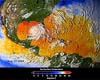
The importance of remotely sensed data and technologies to support natural disasters has prompted attention and action in Washington. New initiatives and legislation authorizing appropriations to the remote sensing industry will be discussed at Strategic Research Institute's U.S. Commercial Remote Sensing Industry conference, scheduled for February 9-10, 2006 in Washington D.C. |
|
|

| The content herein, unless otherwise known to be public domain, are Copyright 1995-2006 - SpaceDaily.AFP and UPI Wire Stories are copyright Agence France-Presse and United Press International. ESA PortalReports are copyright European Space Agency. All NASA sourced material is public domain. Additionalcopyrights may apply in whole or part to other bona fide parties. Advertising does not imply endorsement,agreement or approval of any opinions, statements or information provided by SpaceDaily on any Web page published or hosted by SpaceDaily. Privacy Statement |