|
 |
 |
 |
 |
 |
 |
 |
 |

 |
Astrophysicist Herbert Gursky dies
Washington (UPI) Dec 18, 2006 Astrophysicist Herbert Gursky, superintendent of the U.S. Naval Research Laboratory's Space Science Division, died early this month in Fairfax, Va. The cause of death of the 76-year-old scientist was stomach cancer, his family told The New York Times. Gursky helped develop an X-ray detector launched into space that, in 1966, discovered a star in the constellation Scorpio was emitting more X-rays than visible light, the newspaper said. At the time, the sun was the only confirmed source of X-rays in the upper atmosphere. In 1971, he and others at American Science and Engineering Inc., in Cambridge, Mass., discovered Cygnus, considered to be the first recorded example of a black hole. Gursky received his doctorate in physics from Princeton University in 1958. After teaching at Columbia University, he joined American Science and Engineering in 1961 and became director of the company's space research division in 1970. Gursky moved to Harvard in 1973 and was associate director of optical and infrared astronomy at the Harvard-Smithsonian Center for Astrophysics from 1975-81, when he then joined the Naval Research Laboratory as chief scientist for space research. Community Email This Article Comment On This Article Related Links Understanding Time and Space
 NASA Telescope Picks Up Glow of Universe's First Objects
 Pasadena CA (SPX) Dec 19, 2006
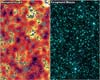
New observations from NASA's Spitzer Space Telescope strongly suggest that infrared light detected in a prior study originated from clumps of the very first objects of the universe. The recent data indicate this patchy light is splattered across the entire sky and comes from clusters of bright, monstrous objects more than 13 billion light-years away. |
|
|

| The content herein, unless otherwise known to be public domain, are Copyright 1995-2006 - SpaceDaily.AFP and UPI Wire Stories are copyright Agence France-Presse and United Press International. ESA PortalReports are copyright European Space Agency. All NASA sourced material is public domain. Additionalcopyrights may apply in whole or part to other bona fide parties. Advertising does not imply endorsement,agreement or approval of any opinions, statements or information provided by SpaceDaily on any Web page published or hosted by SpaceDaily. Privacy Statement |