|
 |
 |
 |
 |
 |
 |
 |
 |

 |
Astronomers Unite To Use Hawaii Telescope
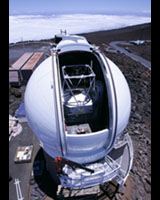
Honolulu, Hawaii (SPX) Oct 05, 2006 Astronomers from several major research institutions around the world have signed an agreement with astronomers at the University of Hawaii to make use of a revolutionary new survey telescope on Haleakala on the island of Maui. The PS1 telescope is expected to discover billions of new stars, galaxies and solar system objects, including potential "killer asteroids" that threaten Earth. It will also produce the most detailed three-dimensional map of the Universe ever made. Over 30 world-renowned scientists and their graduate students have committed themselves to analyzing the unprecedented flood of data from PS1 over the next three and half years. "We decided to recruit a number of top astronomers to join us in order to make the best use of this fantastic instrument," said University of Hawaii's Kenneth Chambers who, as project scientist, is responsible for carrying out the PS1 survey. "We are delighted to have assembled a powerful consortium that includes the prestigious Max Planck Society in Germany, Harvard University, Johns Hopkins University, and the Las Cumbres Observatory in the USA, plus Durham, Edinburgh and Belfast Universities in the United Kingdom," said Rolf Kudritzki, director of UH's Institute for Astronomy. The consortium will contribute about $10 million to cover the cost of operating the telescope in Hawaii. "Pan-STARRS is the next critical step in mapping the Universe. Our scientists are eagerly awaiting the first data for a large range of astronomical projects, said Harvard Professor of Cosmology John Huchra. The PS1 telescope has been developed by astronomers at the University of Hawaii. It is the first stage of the "Panoramic Survey Telescope and Rapid Response System (Pan-STARRS)" project, which is the brainchild of IfA's Nick Kaiser. The telescope, which has a 71-inch diameter mirror, achieved "first light" in June this year. It is currently undergoing engineering tests and will become fully operational in 2007. It will soon be equipped with the world's largest digital camera, now under construction at the UH Institute for Astronomy's Manoa headquarters under the leadership of John Tonry. The camera will have 1.4 billion pixels--about 300 times as many as a typical commercial digital camera. The Institute for Astronomy at the University of Hawaii conducts research into galaxies, cosmology, stars, planets, and the sun. Its faculty and staff are also involved in astronomy education, deep space missions, and in the development and management of the observatories on Haleakala and Mauna Kea. Community Email This Article Comment On This Article Related Links Institute for Astronomy Stellar Chemistry, The Universe And All Within It Space Telescope News and Technology at Skynightly.com
 Australia And Southern Africa Short-Listed For Giant Radio Telescope
 Canberra, Australia (SPX) Sep 27, 2006
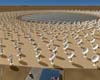
Australia and Southern Africa have been short-listed as the countries to host the Square Kilometre Array (SKA), a giant next-generation radio telescope being developed by scientists in 17 countries. The decision was made by the International SKA Steering Committee, following advice from an external committee of 7 scientists from 5 countries that examined the four site bids. |
|
|

| The content herein, unless otherwise known to be public domain, are Copyright 1995-2006 - SpaceDaily.AFP and UPI Wire Stories are copyright Agence France-Presse and United Press International. ESA PortalReports are copyright European Space Agency. All NASA sourced material is public domain. Additionalcopyrights may apply in whole or part to other bona fide parties. Advertising does not imply endorsement,agreement or approval of any opinions, statements or information provided by SpaceDaily on any Web page published or hosted by SpaceDaily. Privacy Statement |