|
 |
 |
 |
 |
 |
 |
 |
 |

 |
Astronomers Predict Storm Peak
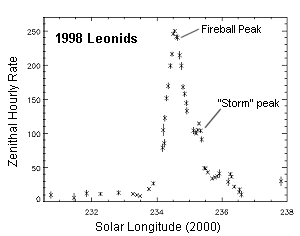
London - November 12, 1999 - The 1999 Leonid meteor shower should produce a fine display in the early hours of the 18th of November, Professor Mark Bailey of Armagh Observatory will tell the Royal Astronomical Society's meeting on Friday 12th November. Research done at Armagh, and by other experts around the world, suggests that an unusually strong shower is on the cards this year when Earth passes through streams of dust that have been shed by Comet Tempel-Tuttle. Professor Bailey is putting his confidence in the work of his colleague at Armagh, Dr David Asher, who collaborated with Rob McNaught of the Australian National University. They believe they have discovered enough about the location in space of the dust streams responsible for the meteors to give 2.08 am GMT on 18th November, give or take 5 minutes, as the time for the peak of the display. Caption 1998 Leonids activity based on visual records from 217 observers who saw more than 47,000 Leonids in 858 observing hours. The vertical axis is the "zenithal hourly rate" of visual meteors, or the hourly rate of meteors an observer would witness under ideal conditions with the meteors appearing directly overhead. The horizontal axis is the solar longitude of Earth, and may also be regarded as time increasing from left to right. The "Fireball peak" corresponds to the impressive fireball display of Nov. 17, 1998. The smaller "Storm peak" occurred approximately 12 hours later just as Earth was crossing the orbital plane of Tempel-Tuttle. Credit: The International Meteor Organization. The number of meteors is more difficult to assess. Dr Asher says, "It's marginal as to whether the meteor activity will reach storm level in 1999, but however strong it turns out to be, European longitudes are ideally placed for observing the outburst". His best estimate is a maximum of 20 meteors a minute visible to a single observer in ideal conditions under a clear, dark sky (conditions rarely experienced by casual observers). Professor Iwan Williams of Queen Mary and Westfield College, London, who has also done research on the Leonids, is more cautious, but said "Most models lead us to expect a better display than last year". Neither Asher nor Williams expects anything like the spectacular storm of 1966, when the rate reached 40 a second for a brief period. Professor Bailey comments, "It is sometimes said that comets are like cats: they have tails and are unpredictable. If that's the case, predicting a meteor storm has to be about as easy as herding cats! But Asher and McNaught believe they have discovered how to do it. The 1999 Leonids will be a serious test of their method."
Minimising the Danger to Satellites Apart from knocking a spacecraft off alignment or causing physical damage, such collisions can also generate a cloud of plasma which may cause electrical shorts or damage a spacecraft's sensitive electronics. This threat is not simply theoretical. In 1993, a European Space Agency satellite called Olympus spun out of control, possibly as the result of an electrical disturbance caused by the impact of a particle from the Perseid meteor shower. There are currently more satellites in orbit around the Earth than ever before, all of which pose a tempting target for one of nature's miniature missiles. Fortunately, impacts with spacecraft are quite rare, but satellite operators around the world will be monitoring the situation very closely and taking a variety of precautions. "There could be a lot of activity, but we just don't know for sure," commented Dr Walter Flury of the European Space Operations Centre (ESOC) at Darmstadt in Germany. "It's better to take precautions now than be sorry later." The European Space Agency's Space Science Department will provide information on meteor numbers to ESOC every 15 minutes. Using this data and radar counts from other sources, ESOC will be able to issue a security alert, warning spacecraft operators to power down their spacecraft or turn them away from the storm. One of the largest targets, the NASA-ESA Hubble Space Telescope will be manoeuvred so that its mirrors face away from the incoming meteors and its solar arrays are aligned edge on to them during the Leonids' predicted peak. Apart from reducing the exposed area of giant solar arrays, operators may shut off power to vulnerable electrical components of satellites. In the case of ESA's two European Remote Sensing (ERS) satellites, all of the science instruments will be switched off during the peak of the Leonid activity. Even spacecraft located some distance from the Earth may be at risk. ESA's Solar and Heliospheric Observatory (SOHO) studies the Sun from a vantage point 1.5 million kilometres away, but it, too, will be turned so that its main navigational aid, the star tracker, is pointing out of harm's way.
Expecting the unexpected Meteor watchers awaiting the Leonid shower last year (1998) were taken by surprise when a spectacular display of bright meteors occurred 16 hours before the predicted time for the maximum of the shower. However, the explanation for this phenomenon was discovered afterwards by David Asher, Mark Bailey, and Professor Vacheslav Emel'yanenko of South Ural University, Chelyabinsk, Russia, and was published in April (see RAS Press Notice 99/09,). They showed that the bright meteors were seen when Earth passed through a dense arc-shaped trail of particles shed from Comet Tempel-Tuttle in the year 1333.
Email This Article Comment On This Article Related Links Space
 Satellite Launch To Boost DTH In India
 Calcutta, India (SPX) Dec 28, 2005
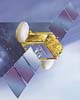
The successful launch Thursday of India's heaviest satellite from spaceport of Kourou in French Guyana may have boosted the country's space research efforts to yet another level, but it has also lifted the spirits of at least three Direct-To-Home televisions broadcasters, one of which has been waiting for years to launch its services in India. |
|
|

|
|
|
|
|
|
|
|
|
|
|
|
| The content herein, unless otherwise known to be public domain, are Copyright 1995-2006 - SpaceDaily.AFP and UPI Wire Stories are copyright Agence France-Presse and United Press International. ESA PortalReports are copyright European Space Agency. All NASA sourced material is public domain. Additionalcopyrights may apply in whole or part to other bona fide parties. Advertising does not imply endorsement,agreement or approval of any opinions, statements or information provided by SpaceDaily on any Web page published or hosted by SpaceDaily. Privacy Statement |