|
 |
 |
 |
 |
 |
 |
 |
 |

 |
Astronauts Float Gravity Plan To Deflect Earth-Threatening Asteroids
Paris (AFP) Nov 09, 2005 Dangerous earth-bound asteroids could be tugged out of harm's way by spacecraft using gravity as a towline, according to two NASA astronauts writing in Thursday's edition of the science journal Nature. Even a "small" asteroid of about 200 metres (660 feet) would cause "widespread damage and loss of life" if it collided with Earth, according to astronauts Stanley Love and Edward Lu. Faced with this threat, many scientists have explored the option of docking a spacecraft to an earth-threatening asteroid in order to deflect its course. However the US astronauts note that asteroids are "likely to be rough and unconsolidated, making stable attachment difficult" especially as "most asteroids rotate". Their proposal has the advantage that docking is not required: the spacecraft merely "hovers nears the asteroid with its thrusters angled outwards so that the exhaust does not impinge on the surface". "The spacecraft tows it without physical attachment by using gravity as a towline," the astronauts propose. According to their calculations, "a 20-tonne gravitational tractor hovering for one year can deflect a typical asteroid of about 200-metre diameter given a lead time of roughly 20 years". Scientists estimate that the meteorite which hit the Mexico area 65 million years ago, wiping out the dinosaurs, would have measured five to 15 kilometres (3.1 to 9.3 miles) in length. NASA's asteroid monitoring programme hopes to identify 90 percent of the thousand or so potentially Earth-threatening asteroids measuring more than a kilometre wide by the end of 2008. Community Email This Article Comment On This Article Related Links SpaceDaily Search SpaceDaily Subscribe To SpaceDaily Express Asteroid and Comet Mission News, Science and Technology
 NASA'S Spitzer Finds Possible Comet Dust Around Dead Star
 Pasadena CA (SPX) Jan 12, 2006
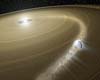
NASA's Spitzer Space Telescope has spotted what may be comet dust sprinkled around the white dwarf star G29-38, which died approximately 500 million years ago. |
|
|

| The content herein, unless otherwise known to be public domain, are Copyright 1995-2006 - SpaceDaily.AFP and UPI Wire Stories are copyright Agence France-Presse and United Press International. ESA PortalReports are copyright European Space Agency. All NASA sourced material is public domain. Additionalcopyrights may apply in whole or part to other bona fide parties. Advertising does not imply endorsement,agreement or approval of any opinions, statements or information provided by SpaceDaily on any Web page published or hosted by SpaceDaily. Privacy Statement |