|
 |
 |
 |
 |
 |
 |
 |
 |

 |
Around The World In 96 Hours
Longmont - Jun 03, 2002 DigitalGlobe has announced plans to launch its next-generation remote sensing system - M5. The company has been working with Ball Aerospace & Technologies Corp. and ITT Industries for the past two years to develop M5 with the first satellite in the M5 constellation scheduled to be operational in early 2006. "M5 is intended to complement our QuickBird high-resolution imaging business," said Herb Satterlee, president and CEO for DigitalGlobe. "Because of M5's ability to collect images over a wide area at very frequent intervals, in addition to providing highly calibrated images with numerous spectral bands, we will be able to offer even more imaging choices to our worldwide customers." The M5 constellation consists of four satellites, each of which will collect five-meter resolution multispectral data over a 185 kilometer-wide area. Images will provide visible, near-infrared and short wave-infrared spectral ranges. The first M5 satellite is scheduled to be operational in the first quarter of 2006, and all four by the third quarter of 2007. The full M5 system will collect images of the Earth's land surface plus coastal regions every four days at nadir. Nadir refers to the satellite's ability to collect images by pointing the camera directly over the area to be imaged, ensuring the highest resolution possible. M5's off-nadir pointing capability - collecting images from an angle - will give DigitalGlobe the ability to revisit any point on the Earth's surface multiple times per day. This will be valuable for time-sensitive applications such as natural disaster assessments. DigitalGlobe will maintain a permanent archive of its M5 data, enabling powerful change detection capabilities, wide-area coverage and timely delivery of products to customers. Data from M5 will complement DigitalGlobe's current offerings of sub-meter resolution images from its QuickBird satellite and lower resolution images through the company's exclusive reseller agreement with SPOT Image Corp. in North America. The M5 images will enable DigitalGlobe to further support a number of market areas worldwide for applications such as agricultural assessments, environmental monitoring and disaster management. In March 2002, the National Aeronautics and Space Administration (NASA) and the U.S. Geological Survey (USGS) announced that the DigitalGlobe team was one of two contract winners for the Formulation Phase of the LandSat Data Continuity Mission. The contract was based on a novel technical approach in which DigitalGlobe, Ball Aerospace, and ITT Industries, will provide NASA and USGS with high-quality data based on the M5 imagery. "NASA and USGS have taken a huge step forward in its visionary efforts by structuring a procurement that facilitates the success of commercial business while ensuring continuity of LandSat data," said Satterlee. "We are pleased that NASA and USGS have been so receptive to our commercial business needs, and our team looks forward to a collaborative arrangement. We have been pursuing a wide-area multi-spectral program of our own for the past two years and are able to successfully combine it with the LDCM requirements." Community Email This Article Comment On This Article Related Links DigitalGlobe SpaceDaily Search SpaceDaily Subscribe To SpaceDaily Express Earth Observation News - Suppiliers, Technology and Application
 New Legislation Initiated To Support Commercial Remote Sensing Industry
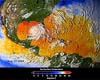 New York NY (SPX) Jan 11, 2006
The importance of remotely sensed data and technologies to support natural disasters has prompted attention and action in Washington. New initiatives and legislation authorizing appropriations to the remote sensing industry will be discussed at Strategic Research Institute's U.S. Commercial Remote Sensing Industry conference, scheduled for February 9-10, 2006 in Washington D.C. |
|
|

| The content herein, unless otherwise known to be public domain, are Copyright 1995-2006 - SpaceDaily.AFP and UPI Wire Stories are copyright Agence France-Presse and United Press International. ESA PortalReports are copyright European Space Agency. All NASA sourced material is public domain. Additionalcopyrights may apply in whole or part to other bona fide parties. Advertising does not imply endorsement,agreement or approval of any opinions, statements or information provided by SpaceDaily on any Web page published or hosted by SpaceDaily. Privacy Statement |