|
 |
 |
 |
 |
 |
 |
 |
 |

 |
Army Boost May Herald Bigger DOD Budget
UPI Pentagon Correspondent Washington (UPI) Oct 09, 2006 The U.S. Army is seeking a significant boost to its budget in 2008 and beyond to pay major bills associated with modernizing the force and restoring equipment broken, worn out and destroyed in the war. But they seem to be fighting for a boost to the Pentagon's overall budget -- about $420 billion this year -- rather than "horse trading" within the services to get the Army a bigger share of defense dollars. "I am on the Joint Chiefs, and I don't want to see the other services disadvantaged as a result of having a proper Army," said Army Chief of Staff Gen. Peter Schoomaker at a press conference Monday in Washington. The Pentagon budget is usually a zero-sum game for the military services. The "topline" for the next year's budget is handed down from the White House in the spring, and the services jockey for extra dollars within those constraints. But 2008 may be different. In a virtually unprecedented move, the Army leadership in August declined to submit a 2008 budget to the Office of the Secretary of Defense, citing a major and irreconcilable "mismatch" between Army strategy, wartime needs, and the $114 billion budget it had been offered for 2008. Harvey said the Army made its case to Defense Secretary Donald Rumsfeld, who has agreed to allow the service to seek more money from the Office of Management and Budget, which is responsible for coordinating budgets across the federal government. Army Secretary Francis Harvey refused to say exactly how much extra the Army is seeking, but the Los Angeles Times has reported it wants $138 billion, approximately $26 billion more than it got for fiscal year 2007. "We felt we had a challenge we couldn't overcome in '08-'13 program," Schoomaker said. Both Harvey and Schoomaker insist that the amount is affordable, given the strength of the U.S. economy. It's a refrain they picked up from Rumsfeld, who has been laying the groundwork for a much larger defense budget for the last year. The rationale is that as a percentage of gross domestic product -- less than 4 percent -- the United States spends less now than it has historically, and can afford much more. "We're at historic lows, and the American people have to make their minds up if that's what they want at a time of great uncertainty," said Harvey. "Ultimately this is an issue of priority. This is not an issue of affordability to our nation," Schoomaker said. In real dollars, even adjusted for inflation, the defense budget is as large now as it was during the Reagan build-up years, if the $300 billion in supplemental appropriations made for the Iraq and Afghan wars are added to it. Schoomaker rejects that calculus, pointing out that supplementals are spent to replenish "consumables" in the war -- destroyed equipment and ammunition, for instance. The Army budget is for modernization of its forces -- developing and buying new weapons and training soldiers. That's not precisely true -- billions in the supplemental have been spent accelerating the Army's already planned reorganization and modernization program to overhaul forces headed to Iraq and Afghanistan. But Schoomaker's concern about supplementals has at least as much to do with timing as it does constraints on how the money can be spent. The fiscal year 2006 supplemental, meant to pay war costs between October 2005 and September 2006, was not submitted to Congress until February 2006 and was not approved until the end of June, just two months prior to the end of the spending year. Where the money will come from is unclear. The White House has cut taxes and shows no willingness to raise them; much of the federal budget is obligated to domestic "entitlement" programs like Medicare and Social Security that are difficult to cut. And it is the White House that has set the budget for the Army and the Pentagon for the last six years. Harvey was careful to credit the White House for the 10 percent increase in the Army budget for the last two years. "So far the Army is getting the resources it needs to execute. So far this headed in the right direction," Harvey said. "The dilemma here is we can't get well on supplemental funding," added Schoomaker.
Source: United Press International Community Email This Article Comment On This Article Related Links The Military Industrial Complex at SpaceWar.com The Military Industrial Complex at SpaceWar.com Learn about the Superpowers of the 21st Century at SpaceWar.com
 US May Miss Out Of Mega India Jet Fighter Deal
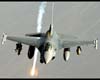 Washington (UPI) Oct 10, 2006
The United States, seeking to enter India's lucrative arms market, is dropping behind on a $6.5-billion Indian Air Force contract for acquiring 126 multi-role fighters. The Times of India reported Oct. 6 that despite Indian concerns about a recent $5 billion sale by Washington of 36 F-16s to archrival Pakistan, the IAF remains confident of its deterrent ability. |
|
|

| The content herein, unless otherwise known to be public domain, are Copyright 1995-2006 - SpaceDaily.AFP and UPI Wire Stories are copyright Agence France-Presse and United Press International. ESA PortalReports are copyright European Space Agency. All NASA sourced material is public domain. Additionalcopyrights may apply in whole or part to other bona fide parties. Advertising does not imply endorsement,agreement or approval of any opinions, statements or information provided by SpaceDaily on any Web page published or hosted by SpaceDaily. Privacy Statement |