|
 |
 |
 |
 |
 |
 |
 |
 |

 |
Army Bets On Point-Click Maps In Iraq
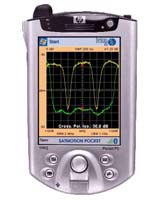
Washington DC (UPI) July 1, 2005 As the Bush administration insists it must stay the course in Iraq, the U.S. Army is giving its soldiers technology that boosts the chances staying the course will be a successful strategy. The central tenet of winning a counter-insurgency war is having solid, accurate intelligence on the enemy. It's a tall order, particularly when the insurgency is rooted in local communities and the force they are fighting is largely foreign, as is the case in Iraq. By August, however, the Army is supposed to have in place a network of intelligence data bases - with names, biometric data, maps -- that the lowest level soldier on a foot patrol will ultimately be able to access with handheld personal data assistants, PDAs, said Lt. Gen. Keith Alexander, the Army's director of intelligence at a Pentagon meeting with reporters Friday. The program will be slow getting started: just 1,000 PDAs will be distributed to the 130,000 troops in Iraq, primarily around Baghdad, by December. The devices will be used, evaluated and rejiggered as necessary for future deployments. Coming across those PDAs will be intelligence gathered from all the sources linked on the network - known as the Joint Intelligence Operations Center - gleaned specifically to support the small unit's mission. For instance, a detailed digital map of the city block a fire team is on will be pushed out from the JIOC, replacing the need for cumbersome and possibly outdated maps. The PDA will beam back the unit's location to the network via a GPS link, and soldiers will be able to use the device to search the data base for information relating to what they are doing. There already exists an extensive secret data base of names of those detained by U.S. forces, according to commanders in Iraq. One possible use of the PDA would be for U.S. soldiers at traffic stops to check names against the computer before waving drivers on. The PDA - dubbed the Commander's Digital Assistant -- has been in Army hands in prototype form since 2002, when General Dynamics offered a version to the 82nd Airborne for an exercise. Colin Agee, who heads the army's intelligence, surveillance and reconnaissance directorate, said there were "manufacturing issues" with the CDA and he could not say how many were ultimately planned to be purchased, nor how many were on hand already. The Center for Strategic and International Studies reported last year that the Army planned to buy about 7,000, but the Army has not included them in the annual budget. Agee said units ultimately equipped with the device would be able to avoid some of the major pitfalls of modern urban warfare, chief among them getting lost in city streets. He pointed out that the convoy Pfc. Jessica Lynch was in took a wrong turn near Nasiriya, Iraq before it was ambushed in 2003. Similarly, the 1993 disaster in Mogadishu, Somalia, came about when insurgents blocked exit roads from the city center with fires, hemming in American forces. "If they had this device they would not have had 'Blackhawk Down,'" Agee said. The point and click maps would have quickly shown the soldiers other routes out of the ambush, and Lynch's unit would have not missed its turn. The CDA is part of an effort to flatten out the intelligence hierarchy. For 60 years or longer the military services have handed down intelligence from the highest echelons to the lowest; by the time it made it down to the foot soldier, it was useless: outdated and likely stripped of all detail that made it relevant. While that has slowly been changing, the counter-insurgency war in Iraq is accelerating the process. The fight cannot be won without U.S. forces gaining advantage in intelligence, military commanders agree. And just collecting the information is not sufficient. It has to be collated with other sources, analyzed and quickly pushed back out to where it makes a difference - soldiers on the street, trying to win the cooperation of average Iraqis and identify those working against them. "Commanders must fight for knowledge rather than wait for intelligence from higher echelons," states a new report from the Army on developing actionable intelligence. The Army is pursuing other intelligence improvements. Included in the initiative is the recruitment and training of 3,000 new "human intelligence" specialists. They are expected to be in place by fiscal year 2009, according to Agee. They will be trained in debriefing, interrogating prisoners, and document and other media exploitation. Community Email This Article Comment On This Article Related Links SpaceDaily Search SpaceDaily Subscribe To SpaceDaily Express Military Space News at SpaceWar.com
 Space Group To Activate New Unit
 Colorado Springs CO (SPX) Jan 6, 2006
Air Force Reserve Command's 310th Space Group will travel deeper into the space program when it activates a new unit Jan. 7. Headquarters Reserve National Security Space Institute will be a Reserve associate unit to the National Security Space Institute in Colorado Springs, Colo. The institute is the Department of Defense's focal point for providing education about space power in joint warfighting. |
|
|

| The content herein, unless otherwise known to be public domain, are Copyright 1995-2006 - SpaceDaily.AFP and UPI Wire Stories are copyright Agence France-Presse and United Press International. ESA PortalReports are copyright European Space Agency. All NASA sourced material is public domain. Additionalcopyrights may apply in whole or part to other bona fide parties. Advertising does not imply endorsement,agreement or approval of any opinions, statements or information provided by SpaceDaily on any Web page published or hosted by SpaceDaily. Privacy Statement |