|
 |
 |
 |
 |
 |
 |
 |
 |

 |
Armed Services Panel Chairman Vows To Boost BMD
UPI Senior News Analyst Washington (UPI) Jul 12, 2006 The chairman of the U.S. House Armed Services Committee vowed Tuesday to try to accelerate U.S. missile defense capabilities. However, Rep. Duncan Hunter, R-Calif., said he had no specific dollar amount in mind, nor did he know where the money might be best used, the Navy Times reported. "We have limited capability right now," Hunter said. "Not that we have a perfect missile defense system today, but at least we have something ... in my view, it is better to have something than nothing." Hunter suggested there is time to alter the 2007 defense authorization bill -- now pending before a House-Senate conference committee -- to make changes in funding for missile defense. Hunter said the cost, whatever it might be, would not necessarily require cutting other defense programs. He believes missile defense is such a high priority that the American people would support giving the Pentagon more money for that program. "One thing we don't know is the future," Hunter told at a news conference. "The American people are looking to their nation to defend them." "We are going to have a missile that comes into the United States that is not a test missile and will not fail," he said, according to the Navy Times report.
Patriots Moved Into Okinawa The Patriot batteries will defend U.S. bases on Okinawa against possible North Korean missile attack, the report said. PAC-3 missiles cost $3.2 million each and are the result of two decades of development. First used during the 1991 Gulf War, the current PAC-3 version shot down two Iraqi missiles in 2003. During the 2003 operation, 22 Patriot missiles were fired. Two of these took down two coalition aircraft. Electronic and software problems caused the PAC-3's Identify Friend or Foe systems to fail. However, this is less of a problem with incoming missiles, as they are rarely friendly, StrategyPage.com said. Chinese war plans are believed to include ballistic missile attacks as well, and one of the targets is said to be Okinawa, the report said. StrategyPage.com said it was uncertain if the Patriot electronics and software had been developed to the point where they could shoot down longer range missiles like the ones North Korea, or China, might fire at Okinawa.
Source: United Press International Community Email This Article Comment On This Article Related Links Learn about missile defense at SpaceWar.com Learn about missile defense at SpaceWar.com Learn about nuclear weapons doctrine and defense at SpaceWar.com All about missiles at SpaceWar.com Learn about the Superpowers of the 21st Century at SpaceWar.com
 Thermoteknix Success In Hit To Kill BMD Test
 Cambridge, UK (SPX) Jul 07, 2006
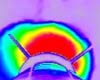
Thermoteknix' MIRIC TB2-30 miniature infrared camera took part in another successful 'hit to kill' missile defense test on June 22nd, off the island of Kauai, Hawaii. A standard Missile 3 was launched from the Aegis cruiser USS Shiloh to intercept a separating target with an integrated multi-purpose sensor payload developed in conjunction with Johns Hopkins University Applied Physics Laboratory (APL). |
|
|

| The content herein, unless otherwise known to be public domain, are Copyright 1995-2006 - SpaceDaily.AFP and UPI Wire Stories are copyright Agence France-Presse and United Press International. ESA PortalReports are copyright European Space Agency. All NASA sourced material is public domain. Additionalcopyrights may apply in whole or part to other bona fide parties. Advertising does not imply endorsement,agreement or approval of any opinions, statements or information provided by SpaceDaily on any Web page published or hosted by SpaceDaily. Privacy Statement |