|
 |
 |
 |
 |
 |
 |
 |
 |

 |
Argonne And DoT Open Transportation Research And Computing Center
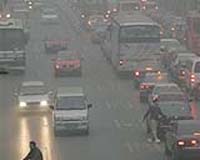
Argonne IL (SPX) Mar 26, 2008 The U.S. Department of Energy's (DOE) Argonne National Laboratory, in cooperation with the U.S. Department of Transportation's (DOT) Research and Innovative Technology Administration, has announced the opening of the Transportation Research and Analysis Computing Center (TRACC) in suburban Chicago. The new, state-of-the-art modeling, simulation and high-performance computing center will tackle a host of intractable transportation problems, including traffic congestion in major cities, the effects of stresses on transportation infrastructure, and the crashworthiness of vehicles. TRACC is located at the DuPage National Technology Park, co-located with the DuPage Airport Authority in West Chicago, Ill, and hosts a dedicated new high-performance computing system intended to deliver substantial computing power to address these and other transportation problems via simulations. Simulations will allow researchers to study vehicle performance issues like aerodynamic drag, fuel injector spray dynamics and under-the-hood thermal management, as well as road weather research. "These areas that we're starting with are just a few specific examples of how you could utilize our computing resources," said Dr. David Weber, TRACC Project Director. "Our modeling, simulation, visualization and high-performance computing capabilities will provide unique collaboration opportunities with colleagues in the transportation field from government, academia and private industry. We all benefit from this advanced modeling capability," he said. With respect to their use in traffic modeling, TRACC simulations will closely resemble actual road conditions, Weber expects. TRACC's models could allow transportation system planners and emergency planning specialists to develop alternative and contingency plans in advance, according to Weber. "If you lose part of your transportation network in an emergency, for example, what do you do?" Weber said. "How do you get the people out in the most efficient way? We think we'll be able to predict congestion patterns as they actually occur for both normal traffic and emergency traffic conditions." Although TRACC models currently encompass only the Chicago area, they could easily be adapted for any metropolitan region. The models that TRACC will generate have the potential to save lives on both the individual and community scales by allowing engineers to better understand crash behaviors and use that knowledge to enhance roadside safety structures. For example, while DOT and the vehicle industry currently perform computerized crash simulations in addition to their expensive real-world crash tests, TRACC technology will significantly increase the speed and accuracy with which these tests can be executed. "We take prototypic experiments and confirm that we can model them accurately to validate the simulation methodology. Then we can use the computer models to extend them to a larger range of accident conditions, and examine system and component performance at higher levels of fidelity with our large-scale computing resources," Weber said. TRACC also has initial funding to perform modeling of bridge hydraulic behavior, such as the flooding of bridges during severe weather events. By seeing how bridges respond to stress from high winds and rising water, civil engineers might be able to prevent damage to the structures during severe storms or hurricanes. "Tests are very expensive and can only look at a limited number of conditions," Weber said. "TRACC provides a more cost-efficient way to look at a lot of different types of transportation issues and understand the effects in greater detail." At the heart of TRACC lies a 128-node, 512-core dedicated massively parallel computer. This high-performance computing system is complemented by state-of-the-art software and expert staff. Remote access to the computing system will be available, both through Argonne National Laboratory, as well as at Argonne's university partners, the University of Illinois and Northern Illinois University. "This new facility will further enhance the DuPage National Technology Park's standing as a leader of high-tech services," said Dupage County Board Chairman Bob Schillerstrom. "With each addition to the Tech Park, we are discovering that their high-tech possibilities are endless, and I look forward to working with everyone involved in this exciting endeavor." Community Email This Article Comment On This Article Related Links TRACC Car Technology at SpaceMart.com
 Clean-Vehicle Research Initiative Making Progress
 Washington DC (SPX) Mar 26, 2008
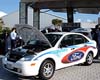
A public-private effort to develop technologies for more fuel-efficient automobiles and to investigate the feasibility of hydrogen-based vehicles has made significant progress in most research areas, says a new report from the National Research Council. While several barriers hinder the program from achieving its full objectives, the potential benefits -- reducing dependence on imported oil and minimizing harmful environmental effects -- justify the cost of the research. |
|
|

| The content herein, unless otherwise known to be public domain, are Copyright 1995-2007 - SpaceDaily.AFP and UPI Wire Stories are copyright Agence France-Presse and United Press International. ESA Portal Reports are copyright European Space Agency. All NASA sourced material is public domain. Additional copyrights may apply in whole or part to other bona fide parties. Advertising does not imply endorsement,agreement or approval of any opinions, statements or information provided by SpaceDaily on any Web page published or hosted by SpaceDaily. Privacy Statement |