
 |
 |
 |
 |
 |
 |
 |
 |
 |

 |
Argentine natural ice dam bursts for first time in winter
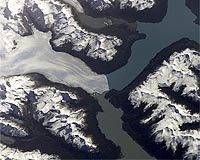
Buenos Aires (AFP) July 9, 2008 A natural ice dam in southern Argentina broke open spectacularly on Wednesday -- the first time it has burst in winter, prompting experts to say climate change was the reason. The 60-meter (200-foot) high wall of ice from the Perito Moreno glacier that usually divides Lake Argentina in Patagonia bursts from time to time under the built-up pressure of the held-back water. The event is one of the prime tourist attractions of Argentina. But until now it had occurred in warmer seasons. This year's breaking of the dam was forecast well in advance, though the exact day was unknown, so relatively few visitors -- around 300 -- were on hand to photograph the phenomenon. Experts' predictions that the rupture could still be days away meant Argentine television stations were caught unprepared and were forced to air images of the last collapse. An Internet broadcast, however, caught this year's rupture live for an estimated 150,000 viewers. "It was like an explosion. Everything shook. It was stirring, rousing," one unidentified woman witness said on television. "I was overjoyed. I didn't know what to do. I screamed and clapped like a crazy person, and I think I even cried," she said. The glacier's ice dam does not break with any regularity, on average just once every four to six years. It remained intact for 16 years until the last time it broke, on March 14, 2006, when 10,000 visitors and millions of television viewers watched the awesome show put on by nature. Los Glaciares National Park director Carlos Corvalan said of the latest breaking of the dam: "This is the first time the glacier has broken up in winter. It could be related to global warming as rising temperatures affects ice friction." Francisco Ferrando, a geographer and glaciology professor at the University of Chile, said global warming was probably causing the ice dam to become thinner. "There is also increased loss of mass in the front of the glacier, which would result in fewer and shorter periods in which the ice is in contact with the basin of the lake," he said. The Perito Moreno glacier is the largest of 356 rivers of ice in Los Glaciares National Park, which each year is visited by thousands of tourists. It is one of the largest glaciers in the world, measuring 275 square kilometers (106 square miles) and five kilometers (three miles) wide at its mouth. It is located 2,800 kilometers (1,740 miles) southeast of Buenos Aires. Community Email This Article Comment On This Article Share This Article With Planet Earth
Related Links Beyond the Ice Age
 Peruvian 'Switzerland' melting under climate change
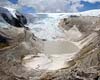 Lima (AFP) May 14, 2008
Peru's Cordillera Blanca, a snow-topped northern mountain range sometimes called the "Peruvian Switzerland," is slowly disappearing because of climate change, a key issue on the table of a Latin America-EU summit being held in Lima this week. |
|
|

| The content herein, unless otherwise known to be public domain, are Copyright 1995-2007 - SpaceDaily.AFP and UPI Wire Stories are copyright Agence France-Presse and United Press International. ESA Portal Reports are copyright European Space Agency. All NASA sourced material is public domain. Additional copyrights may apply in whole or part to other bona fide parties. Advertising does not imply endorsement,agreement or approval of any opinions, statements or information provided by SpaceDaily on any Web page published or hosted by SpaceDaily. Privacy Statement |
 del.icio.us
 Digg
Digg Reddit
 YahooMyWeb
 Google
 Facebook