|
 |
 |
 |
 |
 |
 |
 |
 |

 |
Are The Fifth Horsemen Lost Downtown On Planet Earth
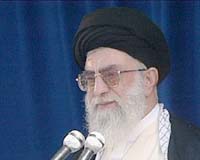
UPI Editor at Large Washington (UPI) Mar 16, 2006 As President Bush's closest advisers enter their fifth year of 16- to 20-hour days, physical and mental exhaustion appears to have produced a dearth of geopolitical thinking. Bush still sees translucent light at the end of the Iraqi tunnel he led the coalition into three years ago. Others are afraid this maybe the search party looking for survivors -- or Iran's Aladdin lamp showing Shiite Iraq how to rub it for a wish back to the dark ages of religious obscurantism. To sort it all out, Congress has asked veteran bipartisan geopolitical thinkers James A. Baker III, the former Secretary of State, and Lee H. Hamilton, former chairman of the House International Relations Committee, and co-chairman of the 9/11 Commission, to lead an "Iraq Study Group" of 10 prominent Republicans and Democrats. With the president's "war on terror" ratings down to 36 percent, the Iraqi "rethink" group came not a moment too soon. Much bigger threats than civil war in Iraq already loom on horizon 2007. Israel is marking its new frontier with a 420-mile, $2.2 billion barrier that leaves Hamas free to cobble together a state from the patchwork of land left, sans East Jerusalem, which can be neither viable nor contiguous, as pledged by Bush. Intifada III is now only a matter of time -- with rockets and missiles over the wall. If Pakistan's next elections were held now instead of 2007, Osama Bin Laden's Urdu-speaking fan club could easily win a majority -- and inherit control of Pakistan's nuclear arsenal. Today, they already govern two of Pakistan's four provinces. This time round the South Asia track, Bush inadvertently humiliated his friend Musharraf, a "major non-NATO ally" since 2004, by extending to rival India, that is not a major non-NATO ally, a sweetheart nuclear deal denied to Pakistan. This was a major boost for Musharraf's extremist opponents. The deal, which faces heavy weather in Congress, allows India, which did not sign the nuclear non-proliferation treaty, to separate its military and civilian nuclear programs and buy U.S. nuclear fuel and technology. The Economist magazine's cover put a cowboy-clad Bush riding a nuclear bomb down to earthly destruction, headlined, "George W. Bush in Dr. STRANGEDEAL -- or How I learned to stop worrying and love my friend's bomb." Read by almost half a million movers and shakers the world over, The Economist called it a "dangerous gamble" because "in his rush to accommodate India, Mr. Bush is missing a chance to win wider nuclear restraint in one of the world's tougher neighborhoods." Hard to see the faintest inkling of restraint in Iran. Its nuclear horse is out of the barn. And it is becoming increasingly clear neither the International Atomic Energy Commission nor the U.N. Security Council can persuade Iran's Israel-hating President Mahmoud Ahmadinejad to give up his new role as the fifth horseman of the apocalypse. He's the one called Hades that shows no pity or mercy. The late author Larry Collins' "5th Horseman" was a nuclear bomb plot in Manhattan circa 1980. What can the U.S. do to thwart fiction becoming reality? Draconian sanctions voted by the U.N. Security Council are a non-starter. China, Russia and the European Union have far too much trade at stake. Even if sanctions were possible, Iran has correctly stated, it can dish out as good as it gets. As long as Iraq is the albatross that sharply restricts military options in Iran, secret high-level diplomacy might be worth exploring. What could the U.S. get in return for a non-aggression treaty with Iran? This could only be plumbed at the level of a secret meeting that stays secret with Iran's Supreme Leader, Ayatollah Ali Hosseini Khamenei in the holy city of Qum. Khamenei says Iran will never retreat from its nuclear ambitions. However, recent emissaries who claim to know his thinking say he wants the wherewithal for the rapid production of a nuclear weapon if such a need should arise, but would stop short of acquiring one. Could the U.S. live with that? The quid pro quo needs triangulating. Would he be willing to grease the skids under his firebrand president? If so, in return for what? A freehand in post-U.S. Iraq? What does he seek in Iraq? The breakup of the country or a unitary state? If the latter, on what terms? The U.S. isn't too good at secret diplomacy in Iran. Last time round, it was a 1986 scheme to fund the Nicaraguan contra rebels from profits gained by selling arms to Iran in return for the release of U.S. hostages held by Hezbollah in Beirut. The architect of the intricate plot was bridge champion Michael Ledeen whose Iranian go-between was Monte Carlo-based arms dealer Manucher Ghorbanifar (whose normal 10 percent commission suddenly escalated to a 370 percent markup on 1,000 anti-tank TOW missiles). NSC Adviser Robert McFarlane and his aide Col. Oliver North traveled to Tehran as Irish flight crewmembers. They brought a Bible signed by President Reagan and a cake in the shape of a key, a symbolic opening of U.S.-Iran relations. The scheme unraveled rapidly after a Lebanese magazine exposed the entire arrangement. McFarlane, his successor as NSC Adviser Adm. John Poindexter, and Ollie North, who ran the undercover operation, were all indicted and convicted of lying to Congress and later cleared on appeal. Something subtler, with inbuilt plausible deniability, is now needed to negotiate a geopolitical bargain that would derail a nascent axis of Islamist extremists from Hamas to Baghdad to Tehran to Islamabad (post-Musharraf) to a resurgent Taliban in Afghanistan. The geopolitical stakes are so much larger than the vain pursuit of the ideal in Iraq. Besides, Israel is not prepared to sit this one out indefinitely. If diplomacy as usual goes nowhere, Jerusalem will strike the country whose president says he wants to wipe Israel off the map -- and the rest of the world will face the mother of all Mideastern crises. Oil at $200 no longer strains credulity,
Source: United Press International Community Email This Article Comment On This Article Related Links - Learn about the Superpowers of the 21st Century at SpaceWar.com Learn about nuclear weapons doctrine and defense at SpaceWar.com
 Chinese PM Downplays China Threat
 Beijing (UPI) Mar 16, 2006
Chinese Prime Minister Wen Jiabao outlined specific reasons why his country's growing strength does not represent a threat to other nations at a press conference Tuesday. |
|
|

| The content herein, unless otherwise known to be public domain, are Copyright 1995-2006 - SpaceDaily.AFP and UPI Wire Stories are copyright Agence France-Presse and United Press International. ESA PortalReports are copyright European Space Agency. All NASA sourced material is public domain. Additionalcopyrights may apply in whole or part to other bona fide parties. Advertising does not imply endorsement,agreement or approval of any opinions, statements or information provided by SpaceDaily on any Web page published or hosted by SpaceDaily. Privacy Statement |