|
 |
 |
 |
 |
 |
 |
 |
 |

 |
Are Ice Age Relics The Next Casualty Of Climate Change
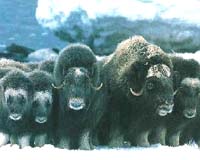
New York NY (SPX) Apr 29, 2008 The Wildlife Conservation Society (WCS) recently launched a four-year study to determine if climate change is affecting populations of a quintessential Arctic denizen: the rare musk ox. Along with collaborators from the National Park Service, U. S. Geological Survey, and Alaska Fish and Game, Wildlife Conservation Society researchers have already equipped six musk ox with GPS collars to better understand how climate change may affect these relics of the Pleistocene. The research team will be assessing how musk ox are faring in areas along the Chukchi and northern Bering Seas, and the extent to which snow and icing events, disease, and possibly predation may be driving populations. "Musk ox are a throwback to our Pleistocene heritage and once shared the landscape with mammoths, wild horses, and sabered cats," said the study's leader Dr. Joel Berger, a Wildlife Conservation Society scientist and professor at the University of Montana. "They may also help scientists understand how arctic species can or cannot adapt to climate change." Once found in Europe and Northern Asia, today musk ox are restricted to Arctic regions in North America and Greenland although they have been introduced into Russia and northern Europe. They have been reintroduced in Alaska after being wiped out in the late 19th century. Currently they found in two national parks: Alaska's Bering Land Bridge National Park and Cape Krusenstem National Monument. Next year, the team will collar an additional 30-40 more animals. Community Email This Article Comment On This Article Related Links Wildlife Conservation Society Darwin Today At TerraDaily.com
 Improved Rock-Dating Method Pinpoints Dinosaur Demise With Unprecedented Precision
 Berkeley CA (SPX) Apr 29, 2008
Scientists at the University of California, Berkeley, and the Berkeley Geochronology Center have pinpointed the date of the dinosaurs' extinction more precisely than ever thanks to refinements to a common technique for dating rocks and fossils. |
|
|

| The content herein, unless otherwise known to be public domain, are Copyright 1995-2007 - SpaceDaily.AFP and UPI Wire Stories are copyright Agence France-Presse and United Press International. ESA Portal Reports are copyright European Space Agency. All NASA sourced material is public domain. Additional copyrights may apply in whole or part to other bona fide parties. Advertising does not imply endorsement,agreement or approval of any opinions, statements or information provided by SpaceDaily on any Web page published or hosted by SpaceDaily. Privacy Statement |