|
 |
 |
 |
 |
 |
 |
 |
 |

 |
Arar Case Shows Screening Probs
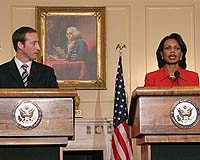
UPI Homeland and National Security Editor Washington (UPI) Jan 25, 2007 The case of a Canadian Arab who U.S. officials this week said would remain on their watch-list of suspected terrorists, despite having been cleared by the Canadian authorities, illustrates the problems such lists can cause, both in themselves, and in their impact on the global image of the United States. Maher Arar was tortured in Syria when U.S. officials sent him there in September 2002 after his named appeared on the watch-list while he was transiting JFK International Airport in New York on his way home to Canada, a Canadian government inquiry found last year. The inquiry found that the U.S. decision to watch-list him was very likely made on the basis of information from the Royal Canadian Mounted Police, but said that initial tip was inaccurate. Canadian authorities removed Arar from their watch-list after the inquiry and asked the United States to do the same. But in an ironic twist, U.S. officials now insist they have their own reasons to consider Arar a threat and refuse to take him off the list. In a letter to Canadian Public Safety Minister Stockwell Day released Monday, Attorney General Alberto Gonzales and Homeland Security Secretary Michael Chertoff say they reviewed the matter, "in response to the concerns raised by ... the Canadian government, and in accordance with Secretary (of State Condoleezza) Rice's discussions" with Canadian officials. "We remain of the view that the continued watch-listing of Mr. Arar is appropriate," they conclude, adding that the decision was based on "information developed by U.S. law enforcement agencies that is independent of that provided to us by Canada." Canadian authorities say they have seen the U.S. information and remain unconvinced. "Our officials recently have looked at all the U.S. information," said Day last week after receiving the letter, "and that does not change our position. We are still maintaining that he should not be on that ... list." One federal official not authorized to speak to the media told United Press International that there had been an interagency dispute over whether to remove Arar from the watch-list, with the State Department advocating his removal and other agencies digging in their heels. A spokesman for the State Department, Eric Watnick, declined to comment on interagency issues and officials at the Justice Department and FBI declined to enlarge on the letter, citing an ongoing lawsuit in which Arar is seeking damages. Another federal official told UPI that complaints about watch-listing, whether they came from individuals, other government departments, or even other governments, were all dealt with by a team at the interagency Terrorist Screening Center. Officials there would review what intelligence professionals call the "derogatory information" -- the intelligence reporting which led the relevant agency to nominate the individual for watch-listing. The Arar case is only one of a series which have highlighted controversial -- and some say illegal -- U.S. policies that have resulted in hundreds of suspected terrorists being delivered by U.S officials to countries where torture is notoriously endemic. U.S. officials say they seek and receive assurances that the individuals they turn over in this fashion will not be mistreated, but critics scoff at that "Assurances?" asked Judiciary Committee Chairman Sen. Patrick Leahy of Gonzales at a hearing last week, "From a country that we also say now, 'Oh we can't talk to them because we can't take their word for anything'?" Officials "knew damned well if (Arar) went to Syria he'd be tortured," said Leahy, adding that it was "beneath the dignity of this country -- a country that has always been a beacon of human rights -- to send somebody to another country to be tortured." Leahy called such cases "a black mark against us," which had "brought about the condemnation of some of our closest and best allies." Watnick played down the impact of the case, pointing out that Canada was one of the closest U.S. allies. "As close as we are, we are still going to disagree from time to time," he said. "It is not a major issue." But the case does raise some interesting policy issues, as the United States and Canada move towards increasing integration of their watch-listing capabilities. Canada has long received some U.S. State Department watch-listing information through its database code-named TUSCAN. Now the Ministry of Transport in Ottawa is developing regulations for an aviation security watch list, but are cagey about how they will share information from it with the United States. The issue "is not addressed" by the current draft regulations, which were posted for public comment for a recently closed 75-day period, said ministry Spokesman Jacques Dufort. He added that officials were "reviewing privacy legislation to see what leeway there might be" for sharing information with other governments while the regulations -- which are subject to parliamentary review and approval -- were being finalized. Under the Security and Prosperity Partnership, a tri-lateral initiative to improve access for goods and people across North America, the United States and Canada are committed to working together to develop common screening policies for people headed to both countries.
Source: United Press International Community Email This Article Comment On This Article Related Links News and analysis about the Global War Against Terror at SpaceWar.com The Long War - Doctrine and Application
 Polonium That Killed Litvinenko Worth Thousands Not Millions
 Moscow (RIA Novosti) Jan 26, 2007
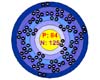
Polonium-210, which Russia supplies to the United States, is worth no more than several tens of thousands of dollars, a source in the Russian nuclear section said Thursday. |
|
|

| The content herein, unless otherwise known to be public domain, are Copyright 1995-2006 - SpaceDaily.AFP and UPI Wire Stories are copyright Agence France-Presse and United Press International. ESA PortalReports are copyright European Space Agency. All NASA sourced material is public domain. Additionalcopyrights may apply in whole or part to other bona fide parties. Advertising does not imply endorsement,agreement or approval of any opinions, statements or information provided by SpaceDaily on any Web page published or hosted by SpaceDaily. Privacy Statement |