|
 |
 |
 |
 |
 |
 |
 |
 |

 |
Ape Versus Man: Volatile DNA?
Moffett Field CA (SPX) Sep 06, 2004 A team of biochemists from UC Riverside published a paper in the June 11 issue of the Journal of Molecular Biology that gives one explanation for why humans and primates are so closely related genetically, but so clearly different biologically and intellectually. It is an established fact that 98 percent of the DNA, or the code of life, is exactly the same between humans and chimpanzees. So the key to what it means to be human resides in that other 2 percent. According to Achilles Dugaiczyk, professor of Biochemistry at UCR, one important factor resides in something called Alu DNA repeats, sometimes called "junk DNA." These little understood sections of DNA are volatile, and prone to sudden mutations, or genomic rearrangements. At times the results are beneficial in that they give rise to new proteins or an altered gene regulation. Sometimes the mutations result in the growth of a cancer tumor, or some other genetic defect. The team, which also included Rosaleen Gibbons, Lars J. Dugaiczyk, Thomas Girke, Brian Duistermars and Rita Zielinski, identified over 2,200 new human specific Alu DNA repeats that are absent from the chimpanzee and most likely other primates. "The explosive expansion of the DNA repeats and the resulting restructuring of our genetic code may be the clue to what makes us human," Dugaiczyk said. "During the same amount of time, humans accumulated more genetic novelties than chimpanzees, making the human/chimpanzee genetic distance larger than that between the chimpanzee and gorilla." Metaphorically speaking, Dugaiczyk said, "Humans and primates march to the rhythm of a drum that looks identical; the same size, shape and sound. But, the human drum beats faster." This chemical analysis of DNA structures also showed something else. The spread of the Alu DNA repeats was written into the chemistry of human chromosomes. The process was not random, Dugaiczyk said, and it was not subject to an environmental "natural selection," separating winners and losers as theorized by Darwin. "We are not contending that natural selection does not exist, but that in this instance it is a chemical process within human chromosomes that explains why humans have an explosive expansion of DNA repeats, and primates do not," Dugaiczyk said. Determining the genetic differences between humans and primates is important for several reasons, Dugaiczyk said, including advancing knowledge about how life developed and evolved on earth. Other benefits include making it easier to identifying human predisposition to genetic disease, by comparing humans with other primate species. A third possible benefit is to underline the importance of protecting endangered primate species. Community Email This Article Comment On This Article Related Links UC Riverside SpaceDaily Search SpaceDaily Subscribe To SpaceDaily Express Dirt, rocks and all the stuff we stand on firmly
 Magnetic Reconnection Region Larger Than 2.5 Million Km Found In The Solar Wind
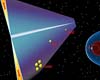 Paris (ESA) Jan 12, 2006
Using the ESA Cluster spacecraft and the NASA Wind and ACE satellites, a team of American and European scientists have discovered the largest jets of particles created between the Earth and the Sun by magnetic reconnection. This result makes the cover of this week's issue of Nature. |
|
|

| The content herein, unless otherwise known to be public domain, are Copyright 1995-2006 - SpaceDaily.AFP and UPI Wire Stories are copyright Agence France-Presse and United Press International. ESA PortalReports are copyright European Space Agency. All NASA sourced material is public domain. Additionalcopyrights may apply in whole or part to other bona fide parties. Advertising does not imply endorsement,agreement or approval of any opinions, statements or information provided by SpaceDaily on any Web page published or hosted by SpaceDaily. Privacy Statement |