|
 |
 |
 |
 |
 |
 |
 |
 |

 |
Anxious wait for feared volcano eruption in Indonesia
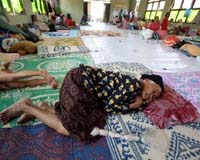
Mount Merapi (AFP) May 17, 2006 Searing heat clouds belched from Indonesia's Mount Merapi volcano Wednesday as scientists waited anxiously for a feared eruption that has forced thousands of villagers from their homes. Despite apparently reduced activity from Merapi, which produced major clouds of gas and ash on Monday, experts warned that it remained highly dangerous. "The eruption process of Merapi is still continuing," said Triyani from the vulcanology office in nearby Yogyakarta. Four heat clouds shot out overnight and travelled up to 3.5 kilometres (about two miles) down the mountain's slopes. At least two were recorded later in the day by the office, with one stretching down four kilometres -- the furthest distance since Monday's activity. Scientists warn that the larger and more deadly heat clouds are typically preceded by smaller ones such as those of the past few days. Clouds covered the volcano's peak in the afternoon, making it difficult to see any fresh lava flows. More than 22,000 residents evacuated from the immediate danger zone meanwhile waited in camps or returned to their homes tracked by authorities. At the Harjobinangun camp in Sleman district -- one of the areas in the zone -- an official from the disaster control post, Suryadi, said 131 people had arrived in the camp Tuesday. "It has something to do with the heat clouds the previous day," he told AFP. "Because of the eruption of the heat clouds on Monday, we did not even have to beg them to come down. They came down on their own." But on Wednesday morning the camp was virtually empty. "It's just as usual. They all attend to their own chores at home" during the day, he said. Many residents have been returning to their homes during the day to collect grass and feed their cows, a major income earner in the area. Scientists said on Tuesday that the new lava dome forming at the peak of Merapi -- which means "Mountain of Fire" -- contained some 2.3 million cubic metres (81 million cubic feet) of lava with an additional 150,000 cubic metres being added daily. The main fear is that the dome, which is leaning southward, may collapse and shoot out blazing lava as well as more deadly heat clouds, rather than explode, as has historically occurred at the 2,914-meter (9,560-feet) volcano rising from the fertile Kedu plain in Central Java. But for the time being the dome was still standing strong, vulcanologist Triyani told AFP. The clouds, known by locals as "shaggy goats", consist of volcanic gases, ash and dust and reach temperatures up to 500 degrees Celsius (930 degrees Fahrenheit). During Merapi's last eruption in 1994 some 66 people were killed, most by these incinerating clouds. Indonesia's second most active volcano had its deadliest eruption in 1930, when 1,369 people were killed by lava and heat clouds. President Susilo Bambang Yudhoyono toured the slopes of the smouldering volcano on Tuesday, urging evacuees to be patient as they wait to return to their homes. As well as being seared by Monday's heat clouds, Merapi's slopes have also been scorched by lava trails since authorities raised the highest alert on Saturday, forcing the mandatory evacuation of residents. Community Email This Article Comment On This Article Related Links Bringing Order To A World Of Disasters When the Earth Quakes A world of storm and tempest
 Millions of US coastal residents not taking hurricane threat seriously: poll
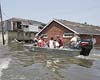 Miami (AFP) May 16, 2006
 One year after the deadly Hurricane Katrina devastated New Orleans, millions of Americans in hurricane-prone areas are paying little heed to the threats posed by the powerful storms, according to a survey Tuesday. |
|
|

| The content herein, unless otherwise known to be public domain, are Copyright 1995-2006 - SpaceDaily.AFP and UPI Wire Stories are copyright Agence France-Presse and United Press International. ESA PortalReports are copyright European Space Agency. All NASA sourced material is public domain. Additionalcopyrights may apply in whole or part to other bona fide parties. Advertising does not imply endorsement,agreement or approval of any opinions, statements or information provided by SpaceDaily on any Web page published or hosted by SpaceDaily. Privacy Statement |