|
 |
 |
 |
 |
 |
 |
 |
 |

 |
Antarctica Gets Insurance Cover Against Ecological Disasters
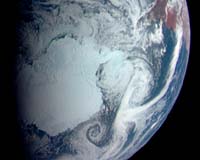
Stockholm (AFP) Jun 15, 2005 Delegates at a conference on protecting Antarctica on Wednesday said they had reached a deal to ensure that the cost of environmental incidents in the region such as oil spills is carried by the companies or nations at fault. The deal was hailed as a major breakthrough after years of discussion to safeguard the highly sensitive ecological balance of the Antarctic continent, with Swedish Foreign Minister Laila Freivalds calling it "a very big success". About 300 experts, including representatives from 45 governments are attending the meeting, the 28th conference on the Antarctica treaty, which opened on June 6 and is due to end Friday. The delegates agreed late Tuesday upon an annex to the existing Protocol on Environmental Protection to the Antarctic Treaty that will hold companies and nations financially responsible for "environmental emergencies" in Antarctica, which covers 14 million square kilometers (5.4 million square miles). According to the new annex, an operator that creates an ecological crisis in the region will be required to take immediate action to rectify the situation. If it fails to do so, it will still need to bear the cost of any action taken by others. If action is not taken before it is too late, the party at fault will pay money equivalent to the clean-up cost into an environmental protection fund, which will then finance future clean-up operations in which the guilty party is unknown. The fund "is to ensure that we don't create an incentive not to clean up," Don MacKay, head of the New Zealand delegation and an expert on the issue, told reporters. "This is designed to ensure that there is no free lunch," he said, adding that in most cases it would not be difficult to determine who was responsible for environmental messes in the region. "It's actually an area where there is relatively little activity... In the event of a major problem, it should be possible to track down who is responsible," MacKay said. A 1959 treaty signed by 12 states recognized Antarctica's role in the global climate and laid down that it was in the interest of mankind that the continent continue to be used exclusively for peaceful purposes and should not become the theater or object of international conflict. "In a sense one can say that Antarctica is like a litmus test on the globe... And therefore we are extremely concerned that this area is duly protected," chairman of the Stockholm conference and former senior United Nations official Hans Corell told reporters. While states and companies are already expected to take responsibility for the messes they make on and around the continent, there has until now been no legal framework forcing them to do so in an area where no one country has jurisdiction. "By creating a legal framework that sets out the procedure for how this will be dealt with we have really made it impossible for states to say: 'we don't know what to do'," international legal advisor at Sweden's foreign ministry Marie Jacobsson told reporters. "The annex puts a clear obligation on states... that their operators really take preventive measures," she added, pointing out that there will be more restrictions put on the special permits needed by companies or individuals wanting to go to Antarctica. To ensure that there is sufficient money to pay for a potential clean-up there will for instance be an insurance requirement. Before the new annex goes into effect however, 28 so-called consultative states, which all have extensive research activities in Antarctica, will need to ratify it, something that Jacobsson admitted could take several years. Community Email This Article Comment On This Article Related Links SpaceDaily Search SpaceDaily Subscribe To SpaceDaily Express Nuclear Space Technology at Space-Travel.com
 Rewriting Glacial History In Pacific North America
 Edmonton AB (SPX) Jan 10, 2006
Although the story on glacier fluctuations in northwestern North America over the last 10,000 years has remained largely unchanged for decades, new evidence discovered by a University of Alberta researcher will rewrite that glacial history and offer clues about our climate history during the last several thousand years. |
|
|

| The content herein, unless otherwise known to be public domain, are Copyright 1995-2006 - SpaceDaily.AFP and UPI Wire Stories are copyright Agence France-Presse and United Press International. ESA PortalReports are copyright European Space Agency. All NASA sourced material is public domain. Additionalcopyrights may apply in whole or part to other bona fide parties. Advertising does not imply endorsement,agreement or approval of any opinions, statements or information provided by SpaceDaily on any Web page published or hosted by SpaceDaily. Privacy Statement |