|
 |
 |
 |
 |
 |
 |
 |
 |

 |
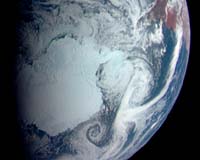
Antarctic Under Threat As Thirst For Oil Grows
Sydney (AFP) Jul 13, 2006 Declining oil reserves and soaring prices could see desperate nations overturning a ban on drilling in the last untouched frontier -- Antarctica, an oil expert told a scientific conference Thursday. Pressure to exploit the pristine, icy continent could become irresistible, Ali Bakhtiari, a former senior adviser for the National Iranian Oil Company, said at a meeting of international Antarctic specialists in Hobart, Tasmania. "I hope it will not happen because that would create enormous difficulties, but when you have the enormous price increase that I can foresee governments and companies will want to find oil anywhere," he said. "There is now only one frontier province left and that is Antarctica," he was quoted as saying by Australia's national news agency AAP. More than 850 delegates are in Hobart this week for the combined meetings of the Scientific Committee on Antarctic Research and the Council of Managers of National Antarctic Programs. Bakhtiari predicted the world's oil production rate would peak this year at 81 million barrels per day and decline to roughly 55 million barrels per day by 2020, pitching oil prices to "stratospheric levels". "In the next 14 years, if my predictions are correct, one third of today's oil supply will be gone. Wait until you see these pressures that are coming up," Bakhtiari said. "We need to realise that crude oil is the master domino in our world. The oil domino is being slowly tumbled and all other dominoes are going to go the same way." Seven countries have made territorial claims in Antarctica, but not all countries recognize these claims. The 1961 Antarctic Treaty establishes the legal framework for the management of Antarctica and has 28 decision-making members, including the seven that claim portions of the continent. These are Argentina, Australia, Chile, France, New Zealand, Norway and Britain. The United States and Russia have reserved the right to make claims, and the US does not recognize the claims of others. Antarctica is protected under the Madrid Protocol, which bans mining, but the prohibition can be changed at any time if all 28 signatory countries agree. Australian Antarctic Division director Tony Press suggested any pressure to mine Antarctica was a long way in the future. "There is no evidence at the moment that anyone is pursuing mineral exploration in Antarctica," he said.
Source: Agence France-Presse Community Email This Article Comment On This Article Related Links - Beyond the Ice Age
 Trees Could Grow In Antarctica Within Century Says Scientist
 Sydney (AFP) Jul 12, 2006
Trees could be growing in the Antarctic within a century because of global warming, an international scientific conference heard Wednesday. With carbon dioxide levels in the atmosphere set to double in the next 100 years, the icy continent could revert to how it looked about 40 million years ago, said Professor Robert Dunbar of Stanford University. |
|
|

| The content herein, unless otherwise known to be public domain, are Copyright 1995-2006 - SpaceDaily.AFP and UPI Wire Stories are copyright Agence France-Presse and United Press International. ESA PortalReports are copyright European Space Agency. All NASA sourced material is public domain. Additionalcopyrights may apply in whole or part to other bona fide parties. Advertising does not imply endorsement,agreement or approval of any opinions, statements or information provided by SpaceDaily on any Web page published or hosted by SpaceDaily. Privacy Statement |