|
 |
 |
 |
 |
 |
 |
 |
 |

 |
Antarctic Ice Shelf Retreats Happened Before
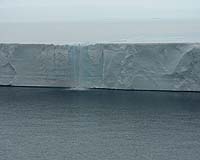
Durham, UK (SPX) Feb 24, 2005 The retreat of Antarctic ice shelves is not new according to research published this week (24 Feb) in the journal Geology by scientists from Universities of Durham, Edinburgh and British Antarctic Survey (BAS). A study of George VI Ice Shelf on the Antarctic Peninsula is the first to show that this currently 'healthy' ice shelf experienced an extensive retreat about 9500 years ago, more than anything seen in recent years. The retreat coincided with a shift in ocean currents that occurred after a long period of warmth. Whilst rising air temperatures are believed to be the primary cause of recent dramatic disintegration of ice shelves like Larsen B, the new study suggests that the ocean may play a more significant role in destroying them than previously thought. The University of Durham's, Dr Mike Bentley, one of the leaders of the project said, 'We know that rising air temperatures can break up ice shelves but there has been a suspicion for some time that the role of the ocean may have been underestimated. This is some of the first evidence that a shift in ocean currents can actually destroy ice shelves. In this case it's possible that a preceding warm period may have primed the ice shelf to disintegrate when the ocean currents shifted.' The scientists analysed sediments from the bottom of a freshwater lake close to the edge of the present George VI Ice Shelf. The results revealed that about 9500 years ago the ice shelf retreated, allowing the sea to flood into the lake. The ice shelf didn't reform until 1500 years later, and has been present ever since. The findings are particularly relevant for other studies on the West Antarctic Ice Sheet where scientists have found that a relatively warm current, Circumpolar Deep Water, is causing high melt rates on the underside of an ice shelf in Pine Island Bay*. The gradual removal of this ice shelf may be causing the glaciers inland to flow faster, which could lead to enhanced drainage of part of the West Antarctic Ice Sheet, and a consequent rise in sea level. Research published this week (24 Feb) in the journal Geology Community Email This Article Comment On This Article Related Links British Antarctic Survey University of Durham University of Edinburgh SpaceDaily Search SpaceDaily Subscribe To SpaceDaily Express Nuclear Space Technology at Space-Travel.com
 Rewriting Glacial History In Pacific North America
 Edmonton AB (SPX) Jan 10, 2006
Although the story on glacier fluctuations in northwestern North America over the last 10,000 years has remained largely unchanged for decades, new evidence discovered by a University of Alberta researcher will rewrite that glacial history and offer clues about our climate history during the last several thousand years. |
|
|

| The content herein, unless otherwise known to be public domain, are Copyright 1995-2006 - SpaceDaily.AFP and UPI Wire Stories are copyright Agence France-Presse and United Press International. ESA PortalReports are copyright European Space Agency. All NASA sourced material is public domain. Additionalcopyrights may apply in whole or part to other bona fide parties. Advertising does not imply endorsement,agreement or approval of any opinions, statements or information provided by SpaceDaily on any Web page published or hosted by SpaceDaily. Privacy Statement |