
 |
 |
 |
 |
 |
 |
 |
 |
 |

 |
Ancient Mother Spawns New Insight On Reptile Reproduction
Calgary, Canada (SPX) Sep 02, 2008 A 75-million-year-old fossil of a pregnant turtle and a nest of fossilized eggs that were discovered in the badlands of southeastern Alberta by scientists and staff from the University of Calgary and the Royal Tyrrell Museum of Palaeontology are yielding new ideas on the evolution of egg-laying and reproduction in turtles and tortoises. It is the first time the fossil of a pregnant turtle has been found and the description of this discovery was published in the British journal Biology Letters. The mother carrying the eggs was found in 1999 by Tyrrell staff while the nest of eggs was discovered in 2005 by U of C scientist Darla Zelenitsky, the lead author of the article and an expert on fossil nest sites, and her field assistant. Both were found about 85 km south of Medicine Hat in the Manyberries area. "Although it is relatively rare to find the eggs and babies of extinct animals, it is even rarer to find them inside the body of the mother," says Darla Zelenitsky, who was also involved in the first discovery of a dinosaur with eggs inside its body. It was almost by accident that scientists realized that the fossil turtle was pregnant. "The turtle specimen was partly broken when it was first discovered. It is this fortuitous break that revealed that the fossil was a mother," says Fran�ois Therrien, a co-investigator of the study and curator of dinosaur palaeoecology at the Royal Tyrrell Museum. The remains of at least five crushed eggs were visible within the body of the fossil female and a CT scan exposed more eggs hidden under its shell. The turtle, estimated to be about 40 cm long, could have produced around 20 eggs. The nest, which was laid by a different female, contained 26 eggs, each approximately 4 cm in diameter. Both specimens belong to an extinct turtle called Adocus, a large river turtle that lived with the dinosaurs and resembles today's slider and cooter turtles. The eggs of Adocus are extremely thick and hard, whereas those of most modern turtles are either thinner or soft-shelled. The thick eggshell may have evolved to protect the eggs from desiccation in dry environments or to protect them from voracious predators during the time of the dinosaurs. Zelenitsky says the pregnant turtle specimen and the nest shed light on the evolution of reproductive traits of modern turtles, specifically those traits related to their eggs and nests. "Based on these fossils, we have determined that the ancestor of living hidden-necked turtles, which are most of today's turtles and tortoises, laid a large number of eggs and had hard, rigid shells," says Therrien. Community Email This Article Comment On This Article Share This Article With Planet Earth
Related Links University of Calgary Darwin Today At TerraDaily.com
 Racing Cane Toads Reveals They Get Cold Feet On Southern Australia Invasion
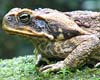 Melbourne, Australia (SPX) Sep 02, 2008
Cane toads weren't allowed to compete in the Olympics, but scientists have raced cane toads in the laboratory and calculated that they would not be able to invade Melbourne, Adelaide or Hobart and are unlikely to do well in Perth or Sydney, even with climate change. |
|
|

| The content herein, unless otherwise known to be public domain, are Copyright 1995-2007 - SpaceDaily.AFP and UPI Wire Stories are copyright Agence France-Presse and United Press International. ESA Portal Reports are copyright European Space Agency. All NASA sourced material is public domain. Additional copyrights may apply in whole or part to other bona fide parties. Advertising does not imply endorsement,agreement or approval of any opinions, statements or information provided by SpaceDaily on any Web page published or hosted by SpaceDaily. Privacy Statement |
 del.icio.us
 Digg
Digg Reddit
 YahooMyWeb
 Google
 Facebook