
 |
 |
 |
 |
 |
 |
 |
 |
 |

 |
Analysis: UAVs protect U.S. troops in Iraq
Baquba, Iraq (UPI) Jan 28, 2009 Unmanned aerial vehicles have proven their worth in the war on terror as reconnaissance and surveillance platforms that provide battlefield commanders with real-time, optically enhanced streaming video of terrain, suspicious movements and intelligence-driven targets of interest. On the brigade level, the Shadow-200 tactical UAV stands out. On the battalion level and lower, it's the Raven, a hand-launched UAV just 38 inches in length, with a 5-foot wingspan and with nose and side-mounted cameras. The battery-operated vehicle is so small, it can be packed in a suitcase and assembled in minutes. It can take to the air for about 60 minutes to provide soldiers in the field with real-time imagery of what lies ahead, although its cameras lack a zoom capability. But neither the Shadow nor the Raven is weapons-capable. The Predator-MQ1, however, is another matter. It's the big boy on the block with lethal punch to its payload, as terrorists in Iraq as well as Afghanistan have found out. "It's one of the most asked-for assets," said Lt. Col. Debra Lee, commander of the Air Force's 46th Expeditionary Reconnaissance Squadron. "There's a kind of bidding war that goes on for its time." The Predator is described by the Air Force as a "medium-altitude, long-endurance aircraft system for interdiction and conducting armed reconnaissance against critical, perishable targets." It's 27 feet long, 6.9 feet high and has a wingspan of 48.7 feet. It's powered by a four-cylinder, 110-hp engine and cruises at speeds from 85 to 135 mph at heights of up to 25,000 feet. Its range is more than 400 miles. The electronics goody bag consists of a daytime variable-aperture TV camera, a variable-aperture infrared camera for low-light/night filming and other sensors that are packed under the nose in a basketball-sized and -shaped housing that rotates 360 degrees. The cameras stream real-time video to centers in the United States as well as to ground commanders closer to its flight sectors through satellite links. The cameras' optical zoom capabilities -- six step, 155x optical zoom -- can be enhanced two times and four times digitally. Its electronics also allow the Predator's cameras to "see" through smoke and haze. Attached to pylons on its wings are two laser-guided AGM Hellfire missiles. A Hellfire launched from a Predator in 2006 killed Iraq's most wanted terrorist, Abu Musab al-Zarqawi. Zarqawi was the leader of al-Qaida in Iraq and for months had successfully escaped determined U.S. and Iraqi efforts to capture or kill him -- until intelligence about his travels in Diyala province in a particular vehicle was received. A Predator put paid to Zarqawi's orchestration of terror. "The Predator B -- MQ-9 -- can also carry 500-pound bombs," said Lee, normally a B-1 bomber pilot. "We had some here, but they're in Afghanistan now. But we hear we may be getting some again soon." The upgraded Predator is a 40-foot turboprop with a ceiling of 50,000 feet. Lee's unit is located at Joint Base Balad, which is north of Baghdad and west of Baquba. She and her 20 personnel, who include civilian contractors who maintain the Predators and their electronics, handle the birds during takeoff and landing phases. Share This Article With Planet Earth
Related Links UAV News - Suppliers and Technology
 Boeing Laser Avenger Shoots Down Unmanned Aerial Vehicle In Tests
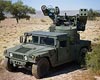 Albuquerque NM (SPX) Jan 28, 2009
Boeing has successfully demonstrated that a laser system mounted on an Avenger combat vehicle can shoot down a small unmanned aerial vehicle (UAV) like those that increasingly threaten U.S. troops deployed in war zones. |
|
|

| The content herein, unless otherwise known to be public domain, are Copyright 1995-2007 - SpaceDaily.AFP and UPI Wire Stories are copyright Agence France-Presse and United Press International. ESA Portal Reports are copyright European Space Agency. All NASA sourced material is public domain. Additional copyrights may apply in whole or part to other bona fide parties. Advertising does not imply endorsement,agreement or approval of any opinions, statements or information provided by SpaceDaily on any Web page published or hosted by SpaceDaily. Privacy Statement |
 del.icio.us
 Digg
Digg Reddit
 YahooMyWeb
 Google
 Facebook