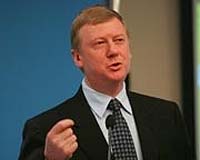
Russia's electricity monopoly United Energy Systems hopes to attract investment worth 700 million euros under the Kyoto Protocol to combat global warming, CEO Anatoly Chubais said on Thursday. But he also issued a warning to consumers that they would have to foot the bill for technology needed to limit emissions within Russia, where electricity production has been booming.
"Our aim is to attract no less than 700 million euros (934 million dollars) on account of the Kyoto protocol," Chubais told a conference on Friday on his company's environmental policy.
But the company, whose subsidiaries account for 25 percent of Russia's carbon dioxide output, will need far more financing to keep its emissions from growing, he warned.
"To seriously put the question of ecology on Russia's agenda, we must seriously put forward the question of its price for the population and for industry."
"Nothing is free. Ecology costs money…. And the consumer always pays" either directly or through taxes, he said.
The protocol's mechanisms allow companies in the West to invest in carbon emission reductions in foreign companies to offset part of their own carbon output.
Russia hopes to attract major investment to reduce carbon emissions due to the potential to reduce output from its inefficient industry and the fact that the economic collapse of the early 1990s made Russia's Kyoto targets more achievable.
Russia has a shortage of natural gas for domestic electricity production due to exports to Europe, Chubais said, leaving Russian generators to use oil and coal, which emit significantly more carbon dioxide.
This will lead to a "radical worsening of the situation with carbon emissions" in Russia unless there is a serious move to new cleaner technologies, he warned, with the percentage of coal used for generation set to grow from 23 percent to 32 percent.
Chubais welcomed recent government moves to implement a mechanism for companies to attract funds for carbon reductions under Kyoto, but said a delay of three years after Russia ratified the protocol could impede its efforts.