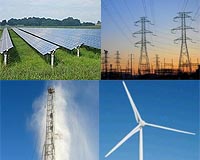
In the UK, the forecast for renewables energy in 2016 remains fairly uncertain, with a large number of businesses calling for greater clarity from the government following its wave of subsidy cuts last year.
According to a report by the International Energy Agency (IEA) in October 2015, growth will fall by more than half during 2016 due to the slower expansion of wind and solar.
Although the IEA expects growth rates to recover, annual additions are unlikely to return to levels before the 2015 election. Research carried out by Bloomberg New Energy Finance for The Independent predicts that renewables in the UK will 'fall off a cliff' in 2016, compared to a record year in 2015.
The Bloomberg assessment finds that UK renewable energy generation will fall by 1 GW – enough clean energy to power 660,000 homes and that after 2020 the country's renewable infrastructure will fall to almost nothing due to lack of investment.
This is in stark contrast to the level support renewables enjoy among the public with a 78 percent approval rating according to a public attitudes survey by the Department of Energy and Climate Change (DECC) in February 2016.
In an earlier survey, published by DECC in April 2015, this figure included an 81 percent approval rating for solar, 74 percent for wave and tidal and 73 percent for wind. Prior to the cuts, the public largely believed renewables to be a good investment and, furthermore, 2015 saw wind farms generate a record 11 percent of UK electricity, up from 9.5 percent in 2014.
Renewable energy elsewhere in the world will boom in 2016, with the US Energy Information Administration (EIA) expecting a 9.5 percent increase in renewable electricity generation during the course of the year. Hydropower in the country accounts for 4.8 percent of that overall figure although there are negative impacts from the current El Nino cycle.
Prospects for US wind and solar remain favourable, with Congress having approved – in December 2015 – an extension of federal tax credits for new wind and solar generators. Growth in utility-scale solar power generation is projected to reach an average of 129 gigawatt hours per day by 2017, increasing by 45 percent from the expected 2016 level.
The leading states for utility-scale solar are California, North Carolina and Nevada, accounting for about two-thirds of projected utility-scale installations during 2015 to 2016. Wind also grew by 13 percent in 2015 and is expected to increase by 14 percent in 2016 and 3 percent in 2017.
Lower taxes and increased government spending in China is likely to mean lower prices for Chinese solar imports while in China itself the Paris agreement is likely to lead to even greater renewable energy deployment. Investment in energy storage technologies is expected to accelerate.
The global future looks especially rosy for solar at the moment, with 64.7 GW of PV installations predicted for 2016 according to the Texas clean energy research firm Mercom Capital Group.
With companies such as Low Carbon making it easier for businesses to invest in solar farms, this also contributes to the rise. China, US and Japan will lead growth in solar during the year, accounting for two thirds of the global market.