
ENERGY TECH
New approach to thermal protection in outdoor wearable electronics
by Staff Writers
Seoul, South Korea (SPX) Mar 17, 2021

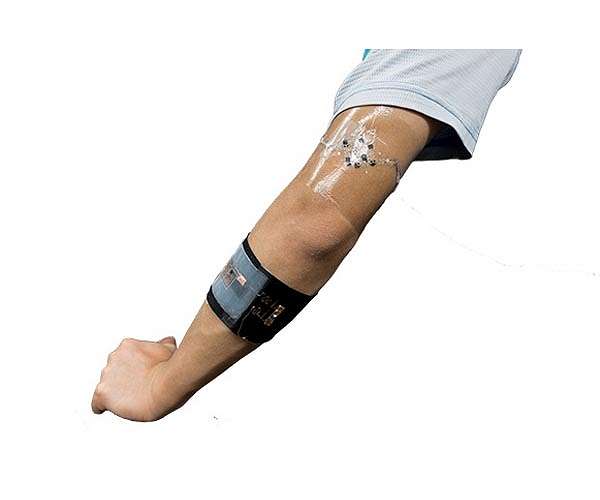
stock illustration only

Wearable electronic devices like fitness trackers and biosensors, are very promising for healthcare applications and research. They can be used to measure relevant biosignals in real-time and send gathered data wirelessly, opening up new ways to study how our bodies react to different types of activities and exercise. However, most body-worn devices face a common enemy: heat.

Heat can accumulate in wearable devices owing to various reasons. Operation in close contact with the user's skin is one of them; this heat is said to come from internal sources. Conversely, when a device is worn outdoors, sunlight acts as a massive external source of heat.

These sources combined can easily raise the temperature of wearable devices to levels that not only are uncomfortable for the user, but also cause erroneous readings and measurements. Unfortunately, researchers have been unable to completely address this issue. Most available heat sinks and dissipators for wearable devices are based on thin metallic layers, which block electromagnetic signals and thus hinder wireless communications.

In a recent study published in Advanced Science, scientists from Korea and the US have developed an innovative solution to combat heat in wearable biosensors. Led by Professor Young Min Song from Gwangju Institute of Science and Technology (GIST), Korea, the team produced a nano-/micro-voids polymer (NMVP), a flexible and nonmetallic cooler made from two perforated polymers: polymethylmetacrylate and styrene-ethylene-butylene-styrene.

The resulting material has many attractive qualities. First, it has almost 100% reflectivity in the solar spectrum, meaning that it reflects nearly all sunlight. Second, it has high emissivity in the range of frequencies known as the atmospheric window. Thus, the material can easily radiate excess heat into the atmosphere, which helps cool it down. Finally, the good mechanical properties of the new polymer make it suitable for outdoor wearable devices.

To test the effectiveness of their innovation, the scientists built a patch-type tissue oximeter equipped with an NMVP-based cooler. Thanks to the superior performance of the cooler, their wearable biosensor could externally measure the concentration of oxygen in blood more accurately than conventional oximeters while also maintaining a much lower temperature.

"Our approach is the first demonstration of successful thermal management in wearable devices considering both internal and external heat sources without blocking wireless communications," remarks Prof. Song.

The promising results of this study could pave the way for the widespread adoption of wearable devices and biosensors, which will become powerful tools in health monitoring and the training of athletes. With eyes set on the future, Prof. Song comments: "Our flexible strategy for radiative cooling will help bring about thermally protected skin-like electronics, which in turn will make human body monitoring unobtrusive and imperceptible."

The term "cool gadgets" is likely to get a whole new meaning in the future!

Research paper


Related Links
Gwangju Institute Of Science And Technology
Powering The World in the 21st Century at Energy-Daily.com

ENERGY TECH
Tunnels to become CO2-neutral energy suppliers
Graz, Austria (SPX) Feb 24, 2021
After completion in about ten years, the Brenner base tunnel is expected to provide relief for transit traffic between Italy and Austria. The Brenner Base Tunnel Company (BBT SE) and Innsbrucker Kommunalbetriebe (Innsbruck municipal works) now want to generate an additional benefit together with the Institute of Rock Mechanics and Tunnelling at Graz University of Technology and determine the geothermal potential of the tunnel, as Institute head Thomas Marcher explains: "We are investigating whether and ... read more

Comment using your Disqus, Facebook, Google or Twitter login.

Share this article via these popular social media networks
del.icio.usdel.icio.us DiggDigg RedditReddit GoogleGoogle

ENERGY TECH
UK CO2 emissions halved since 1990: study

Germany hits climate target thanks to pandemic

When green energy is the 'default' choice consumers stay loyal to renewables

UK banks face climate conflicts of interest: study

ENERGY TECH
New approach to thermal protection in outdoor wearable electronics

Understanding imperfections in fusion magnets

Material from Russia will triple the capacity of lithium-ion batteries

Wartsila's flexible floating energy storage system bolsters Philippine power grid

ENERGY TECH
TechnipFMC enters partnership with Magnora to develop floating offshore wind projects

Field study shows icing can cost wind turbines up to 80% of power production

BP enters UK offshore wind sector

Denmark moves forward on North Sea 'energy island'

ENERGY TECH
Starting small to answer the big questions about photosynthesis

New perovskite fabrication method for solar cells paves way to large-scale production

Seeing both sides of light collection

Study finds plants would grow well in solar cell greenhouses

ENERGY TECH
Nuclear power is important for a decarbonized, resilient energy system

Putin, Erdogan launch new phase of Turkish nuclear power plant

UAE to host IAEA's most complex nuclear crisis drill

GE Hitachi Nuclear Energy and Fermi Energia Advance small modular reactor technology cooperation

ENERGY TECH
Genome scalpel invented for industrial microalgae to efficiently turn CO2 into biofuel

Double-duty catalyst generates hydrogen fuel while cleaning up wastewater

Aviation leaders launch sustainable-fuel emissions study on a commercial passenger jet

Huge potential for electronic textiles made with new cellulose thread

ENERGY TECH
UK energy giants pivot towards cleaner fuels

Environmental groups file complaint against Chevron's green claims

UK's oil consultant contract for climate talks sparks concern

Novel hydrogen fuel purification membrane paves the way for greener future

ENERGY TECH
NASA Joins White House National Climate Task Force

Europe's droughts since 2015 'worst in 2,000 years'

The number that could shift climate action into overdrive

Pentagon working group to address climate change as national security threat