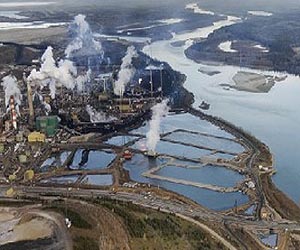
The Canadian oil sands are likely to become the largest single source of imported oil to the United States this year and could ultimately supply more than a third of America's foreign oil by 2030, says a new report.
During the last 10 years, production from oil sands more than doubled, from 600,000 barrels per day in 2000 to 1.35 million barrels per day in 2009, the report from IHS Cambridge Energy Research Associates released Wednesday shows.
The report's authors point out that oil sands have even more potential — ranging from 3.1 to 5.7 million barrels per day by 2030.
A report from the International Energy Agency last November ranked Canada second only to Saudi Arabia in terms of its proven oil reserves, most of which come from oil sands deposits.
"The oil sands will play a key role in meeting future world oil demand," said IHS CERA managing director Jim Burkhard.
"Oil will continue to play a critical role in U.S. energy supply and the oil sands offer the possibility of increasing oil supply security while offsetting reduced supply from some of the United States' traditional suppliers," he said.
The CERA report was released on the same day as another report — "Tar Sands Invasion: How Dirty and Expensive Oil from Canada Threatens America's New Energy Economy" — by a coalition of environmental groups. They say Canada's oil industry is taking advantage of the Deepwater Horizon disaster in the Gulf of Mexico to offer its dirty oil as an alternative to offshore drilling.
"Importing the dirtiest oil on earth would only perpetuate our addiction to fossil fuels and put our nation at risk," said Susan Casey-Lefkowitz, international program director at the Natural Resources Defense Council. "The best energy security is to break our addiction to oil and move forward with innovative transportation solutions such as electric cars, fuel efficiency and smart growth," she said.
Corporate Ethics International, Earthworks and the Sierra Club also participated in the report.
The groups said that production of tar sands oil is estimated to release at least three times more greenhouse gas emissions per barrel than the production of conventional crude oil. It also requires more water to extract and has already created more than 50 square miles of toxic waste ponds, which threaten the health of indigenous communities downstream.
The CERA report, however suggests that industry and government cooperate in developing new technology that will reduce the oil sands' greenhouse gas emissions, water use and land disturbance.
"Energy security needs do not have to be at odds with the environment," the CERA report said.
Share This Article With Planet Earth