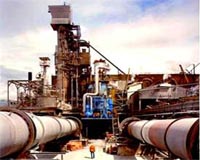
After two years of biomass gasification testing at the company's Product Development Centre in Kamloops, BC, Nexterra Energy has confirmed that renewable synthesis gas, or "syngas", produced by its gasifier has the ability to displace at least 60 per cent of fossil fuels used in lime kilns.
Depending on the biomass feedstock and existing equipment configurations, 95 per cent substitution may be possible at many pulp mills, and up to 100 per cent in certain types of boilers.
The ability to convey syngas from where it is produced and combust it inside existing thermal process equipment could lead to dramatic cost and CO2 emissions reductions in a number of industries. The system could be used in multiple industrial applications including pulp mill lime kilns, power boilers, rotary dryers and calciners commonly found in mineral processing, mining, cement and ethanol production industries.
"Nexterra's direct fire biomass gasification system is now ready for demonstration at commercial scale," said Jonathan Rhone, Nexterra President and CEO.
"Once proven at this scale, we plan a full commercial rollout for industries such as pulp and paper, wood products, mining and others that want to reduce operating costs while lowering their carbon footprint. Up to now, these customers were limited to using either natural gas or fuel oil. Syngas offers a cheaper, carbon-neutral and renewable fuel alternative."
Nexterra's first generation gasification systems are close-coupled with heat exchangers to generate hot water, steam or hot air. The new direct fire application enables customers to decouple the process by producing syngas in one location and combusting it elsewhere on a site.
The product development program included process simulation of end user equipment, as well as testing of specialized syngas conveying, pressurization and burner equipment at Nexterra's test facility.
Nexterra's technological breakthrough makes the switch from fossil fuels to syngas an attractive option for North America's more than 100 kraft pulp mills and other industrial sites which face record high natural gas prices and, in British Columbia's case, new carbon taxes.
Installation of a Nexterra direct fire gasification system at an average sized commercial pulp mill lime kiln, for example, has the potential to reduce natural gas consumption by more than 800,000 gigajoules (GJ) per year, the equivalent amount of natural gas needed to heat 5,000 residential homes.
In addition, such a system could save a mill several million dollars annually and reduce greenhouse gas emissions by more than 25,000 tonnes per year.
The direct fire testing program was supported by Sustainable Development Technology Canada (SDTC), a not-for-profit foundation created by the Government of Canada, as well as by Canada's National Research Council/IRAP Program, Natural Resources Canada and Ethanol BC.