
ENERGY TECH
New catalyst produces cheap hydrogen
by Staff Writers
Brisbane, Australia (SPX) Dec 03, 2018

A new water-splitting catalyst material produce hydrogen cheaply without fossil fuels

Professor Anthony O'Mullane said the potential for the chemical storage of renewable energy in the form of hydrogen was being investigated around the world. "The Australian Government is interested in developing a hydrogen export industry to export our abundant renewable energy," said Professor O'Mullane from QUT's Science and Engineering Faculty.

"In principle, hydrogen offers a way to store clean energy at a scale that is required to make the rollout of large-scale solar and wind farms as well as the export of green energy viable.

"However, current methods that use carbon sources to produce hydrogen emit carbon dioxide, a greenhouse gas that mitigates the benefits of using renewable energy from the sun and wind.

"Electrochemical water splitting driven by electricity sourced from renewable energy technology has been identified as one of the most sustainable methods of producing high-purity hydrogen."

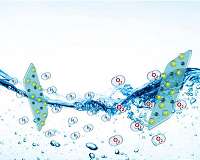
Professor O'Mullane said the new composite material he and PhD student Ummul Sultana had developed enabled electrochemical water splitting into hydrogen and oxygen using cheap and readily available elements as catalysts.

"Traditionally, catalysts for splitting water involve expensive precious metals such as iridium oxide, ruthenium oxide and platinum," he said.

"An additional problem has been stability, especially for the oxygen evolution part of the process.

"What we have found is that we can use two earth-abundant cheaper alternatives - cobalt and nickel oxide with only a fraction of gold nanoparticles - to create a stable bi-functional catalyst to split water and produce hydrogen without emissions.

"From an industry point of view, it makes a lot of sense to use one catalyst material instead of two different catalysts to produce hydrogen from water."

Professor O'Mullane said the stored hydrogen could then be used in fuel cells.

"Fuel cells are a mature technology, already being rolled out in many makes of vehicle. They use hydrogen and oxygen as fuels to generate electricity - essentially the opposite of water splitting.

"With a lot of cheaply 'made' hydrogen we can feed fuel cell-generated electricity back into the grid when required during peak demand or power our transportation system and the only thing emitted is water."

Research Report: "Gold Doping in a Layered Co-Ni Hydroxide System via Galvanic Replacement for Overall Electrochemical" was published in Advanced Functional Materials.


Related Links
Queensland University of Technology
Powering The World in the 21st Century at Energy-Daily.com

ENERGY TECH
Radical approach for brighter LEDs
Cambridge UK (SPX) Nov 26, 2018
Scientists have discovered that semiconducting molecules with unpaired electrons, termed 'radicals' can be used to fabricate very efficient organic-light-emitting diodes (OLEDs), exploiting their quantum mechanical 'spin' property to overcome efficiency limitations for traditional, non-radical materials. Radicals are usually noted for their high chemical reactivity and often detrimental effects, from human health to the ozone layer. Now radical-based OLEDs could form the basis for next-generation ... read more

Comment using your Disqus, Facebook, Google or Twitter login.

Share this article via these popular social media networks
del.icio.usdel.icio.us DiggDigg RedditReddit GoogleGoogle

ENERGY TECH
EU court backs Dyson on vacuum cleaner energy tests

Mining bitcoin uses more energy than Denmark: study

Spain's Ibedrola sells hydro, gas-powered assets in U.K. for $929M

How will climate change stress the power grid

ENERGY TECH
Radical approach for brighter LEDs

Making it crystal clear: Crystallinity reduces resistance in all-solid-state batteries

The shape of things to come: Flexible, foldable supercapacitors for energy storage

RUDN chemists made an electrode for hydrogen fuel production out of Chinese flour

ENERGY TECH
Coordinated development could help wind farms be better neighbors

Roadmap to accelerate offshore wind industry in the United States

Denmark-based Orsted adds to its U.S. wind energy assets

Making wind farms more efficient

ENERGY TECH
UNH researchers discover new materials to generate solar fuel production

Explaining the plummeting cost of solar power

How Chile accomplished its renewable energy boom

Solar panels for yeast cell biofactories

ENERGY TECH
Bulgaria leader opposed to increased carbon-cutting targets

France to close 14 nuclear reactors by 2035: Macron

Hard choices as Macron charts France's energy future

Japan faces difficult energy choices

ENERGY TECH
Dead fish to power Norwegian cruise liners

How to convert carbon dioxide into plastics and other products

Affordable catalyst for CO2 recycling

Bio jet fuels good for the climate, but technologies need tweaking

ENERGY TECH
Crude oil prices rise as some see buying opportunities after overnight lows

Petroperu dives deeper into debt as it pushes controversial refinery upgrade

Peru 'catastrophe' feared after 8,000-barrel Amazon oil spill

Iraq seeks power revamp to head off sanctions, protests

ENERGY TECH
Could an anti-global warming atmospheric spraying program really work?

Climate change could cost US 'hundreds of billions' a year: study

EU urges members to submit ambitious climate plans

Global warming outpaces efforts to slow it: UN